
Month
- December 2025
- November 2025
- October 2025
- September 2025
- August 2025
- July 2025
- June 2025
- May 2025
- April 2025
- March 2025
- February 2025
- January 2025
- December 2024
- November 2024
- October 2024
- September 2024
- August 2024
- May 2024
- December 2023
- November 2023
- October 2023
- September 2023
- August 2023
- July 2023
- June 2023
- May 2023
- April 2023
- March 2023
- February 2023
- January 2023
- December 2022
- November 2022
- October 2022
- September 2022
- August 2022
- July 2022
- June 2022
- May 2022
- April 2022
- March 2022
- February 2022
- January 2022
- December 2021
- November 2021
- October 2021
- September 2021
- August 2021
- July 2021
- June 2021
- May 2021
- April 2021
- March 2021
- February 2021
- January 2021
- December 2020
- November 2020
- October 2020
- September 2020
- August 2020
- July 2020
- June 2020
- May 2020
- April 2020
- March 2020
- February 2020
- January 2020
- December 2019
- November 2019
- October 2019
- September 2019
- August 2019
- July 2019
- June 2019
- May 2019
- April 2019
- March 2019
- January 2019
- December 2018
- November 2018
- October 2018
- September 2018
- August 2018
- July 2018
- June 2018
- May 2018
- April 2018
- March 2018
- February 2018
- January 2018
- December 2017
- November 2017
- October 2017
- September 2017
- August 2017
- July 2017
- June 2017
- May 2017
- April 2017
- March 2017
- February 2017
- January 2017
- December 2016
- November 2016
- October 2016
- September 2016
- August 2016
- June 2016
- May 2016
- April 2016
- March 2016
- February 2016
- January 2016
- May 2015
- May 2014



![[Report] NYSEAN Conference on Academic and Intellectual Freedom in Southeast Asia and United States](https://images.squarespace-cdn.com/content/v1/657a0c3cd9317f7b22ebbb67/1762803341679-6TPMNYUF3UJHWPMDB7UU/1.png)
![[Recording] States Against Nations: Meritocracy, Patronage, and the Challenges of Bureaucratic Selection](https://images.squarespace-cdn.com/content/v1/657a0c3cd9317f7b22ebbb67/1762634037608-ONWW60MGCV2GK30UVV5C/1016+Nick+Kuipers+Horizontal+Flyer.png)
[Recording] States Against Nations: Meritocracy, Patronage, and the Challenges of Bureaucratic Selection
Nicholas Kuipers discusses his new book, States Against Nations (Cambridge University Press, 2025), specifically how Indonesia's civil service examination is a method of bureaucratic selection. Despite its meritocratic measures, Kuipers asserts that these exams can reinforce existing inequalities within society. Drawing on large-scale surveys, experiments, and archival documents, States Against Nations provides a thought-provoking perspective on the challenges of bureaucratic recruitment and unearths the tension between state- and nation-building goals.
![[Recording] Chinese Indonesians and the Making of a Nation](https://images.squarespace-cdn.com/content/v1/657a0c3cd9317f7b22ebbb67/1762633412696-4Y75OAPEOEKIBAYSF23X/sddefault-4.jpg)
[Recording] Chinese Indonesians and the Making of a Nation
Nationalism is an inherently unifying and totalizing force. But what happens when other identities begin to encroach on certain visions of what it means to be Indonesian? Deconstructing Indonesia, a student-run seminar, pays special attention to Chinese Indonesians, one of the minority groups in Indonesia.

Gatty Lecture Rewind: Aditya Bhattacharjee, Mellon Postdoctoral Fellow from Asian Studies, Cornell University
In this episode of Gatty Lecture Rewind, the host Namfon Narumol Choochan interviews Dr. Aditya Bhattacharjee, Mellon Postdoctoral Fellow in Asian Studies at Cornell University. Together, they discuss how growing up in Bangkok led him to study the localization and globalization of Hinduism. Focusing on the transnational appearances of Ganesha in Thailand and Thai restaurants in the United States, Dr. Bhattacharjee explains how and why this deity becomes a visible conduit for understanding the globalization of religious practices and religious belonging beyond the exclusively Thai-Buddhist framework.

Talking Indonesia Podcast: Kampung and Urban Advocacy
In this episode of Talking Indonesia, Clara Siagian and Tito Ambyo speak with Dian Tri Irawaty, Program Director at the University of Melbourne’s Rujak Center for Urban Studies, about the ongoing struggle for housing rights in Jakarta’s kampung communities.

He Studied Elephant Behavior to Save Lives
In an article for the New York Times, Emily Anthes interviews Joshua Plotnik, who has been studying Asian elephant cognition for 20 years. In his research at Salakpra Wildlife Sanctuary Thailand, his team had created personality profiles to direct mitigation tactics toward each particular elephant's personality.

Anguish for Residents as Thailand’s Most Polluting Coal Plant Gets New Lease of Life
In an article for Mekong Independent, Gerald Flynn discusses Thailand's decision to delay the decommissioning of several coal-fired units at the 2,400-megawatt Mao Moh power plant, which has sparked health related worries amongst the community, as the plant is Thailand's largest carbon dioxide pollution project.

Fil-Am Educator and Journalist Feted with Lifetime Achievement Award
In an article for BusinessMirror, Troi Santos highlights Noel Pangilinan, an educator, journalist, and member of the Fil-Am Press Club of New York, who recently received the Lifetime Achievement Award for his long service to education, journalism, and the promotion of Filipino heritage in the United States.

Call for Collaborators on AI Governance in Southeast Asia
Haakon Huynh (Columbia University) is seeking collaborators for ongoing research on artificial intelligence (AI) governance in Southeast Asia. His recent working paper, “Digital Sovereignty or Dependency? The Political Economy of AI Infrastructure in Vietnam,” examines how Vietnam governs AI infrastructure amid growing foreign investment from firms like NVIDIA.
Haakon welcomes contact from scholars, practitioners, and students interested in AI policy, digital infrastructure, or the political economy of technology in the region.
![[Recording] Songs Beyond Borders: Thailand and Transnational Musical Connections](https://images.squarespace-cdn.com/content/v1/657a0c3cd9317f7b22ebbb67/1761280971519-P422B6DTBE9TNCML4T3G/NYSEAN+Jeff+and+Ben+Flyer+-+Horizontal.png)
[Recording] Songs Beyond Borders: Thailand and Transnational Musical Connections
Jeffrey Wasserstrom and Benjamin Tausig discuss how music features in their new books and how they engage with songs in their various writings. Dr. Wasserstrom discusses the Milk Tea Alliance, a coalition that brought together activists from Thailand, Myanmar, and Hong Kong. Dr. Tausig introduces his latest book, Bangkok After Dark, which places nightlife in Thailand's capital city during the Cold War into a transnational perspective via discussion of jazz pianist Maurice Rocco. Netiwit Chotiphatphaisal offers his remarks on both presentations as well as his own experiences with music and community organizing. The videos and musicians mentioned during the discussion can be found in this YouTube playlist.
Gatty Lecture Rewind: Rachel Leow, Department of History, University of Cambridge
In this episode of Gatty Lecture Rewind, the hosts join Dr. Rachel Leow, Associate Professor of Modern East Asian History at the University of Cambridge, for a lively conversation that dives into the tangled, shimmering histories of migration, language, and ideas across Asia’s maritime world.

New Books Network: Queer Correctives
In this episode of the New Books in Critical Theory, Vincent Pak discusses his new book, Queer Correctives: Discursive Neo-homophobia, Sexuality and Christianity in Singapore (Bloomsbury Academic, 2025), which explores Christian discourses of sex and sexuality in Singapore to argue that metanoia, the theological concept of spiritual transformation, can be read as a form of neo-homophobia that coaxes change in the queer individual.
The Great Rebalancing of Area Studies
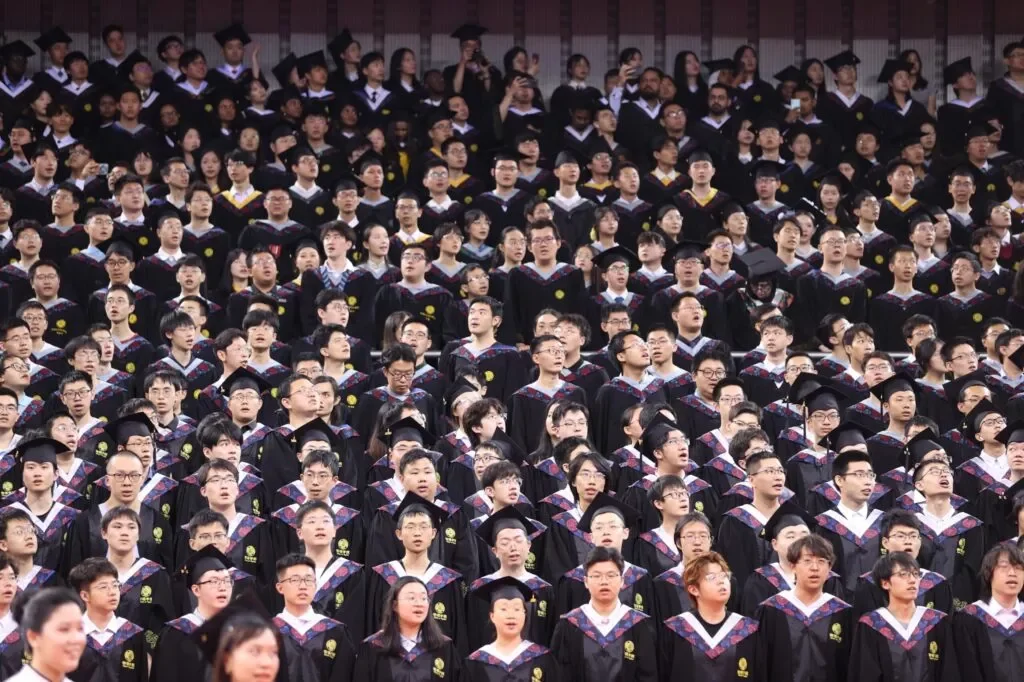
In an article for East Asia Forum, Gerhard Hoffstaedter discusses China's rising influence over area studies, particularly in Southeast Asia. What was once an area dominated by Western scholars has shifted, in light of funding cuts and shifting government priorities by the US, UK, EU, and Australia. The shift towards Chinese advancements in this area constitutes a fundamental rebalancing of global knowledge production with profound geopolitical implications.

Legacies of War: Unhealed Wounds and the Deportation of Southeast Asian Refugees
Jonathan Lam's essay published in the Southeast Asia Digital Library examines the lasting legacy of the Vietnam War and the US Secret War in Southeast Asia, particularly the extensive bombing campaigns in Laos and Cambodia. The essay explores the devastation caused by US military intervention, the refugee and deportation crisis since the fall of Saigon, and how connections to these historical patterns of US imperialism continue to shape the lives of Southeast Asian diaspora communities today.