
Month
- September 2026
- August 2026
- July 2026
- June 2026
- May 2026
- April 2026
- March 2026
- February 2026
- January 2026
- December 2025
- November 2025
- October 2025
- September 2025
- August 2025
- July 2025
- June 2025
- May 2025
- April 2025
- March 2025
- February 2025
- January 2025
- December 2024
- November 2024
- October 2024
- September 2024
- August 2024
- May 2024
- December 2023
- November 2023
- October 2023
- September 2023
- August 2023
- July 2023
- June 2023
- May 2023
- April 2023
- March 2023
- February 2023
- January 2023
- December 2022
- November 2022
- October 2022
- September 2022
- August 2022
- July 2022
- June 2022
- May 2022
- April 2022
- March 2022
- February 2022
- January 2022
- December 2021
- November 2021
- October 2021
- September 2021
- August 2021
- July 2021
- June 2021
- May 2021
- April 2021
- March 2021
- February 2021
- January 2021
- December 2020
- November 2020
- October 2020
- September 2020
- August 2020
- July 2020
- June 2020
- May 2020
- April 2020
- March 2020
- February 2020
- January 2020
- December 2019
- November 2019
- October 2019
- September 2019
- August 2019
- July 2019
- June 2019
- May 2019
- April 2019
- March 2019
- January 2019
- December 2018
- November 2018
- October 2018
- September 2018
- August 2018
- July 2018
- June 2018
- May 2018
- April 2018
- March 2018
- February 2018
- January 2018
- December 2017
- November 2017
- October 2017
- September 2017
- August 2017
- July 2017
- June 2017
- May 2017
- April 2017
- March 2017
- February 2017
- January 2017
- December 2016
- November 2016
- October 2016
- September 2016
- August 2016
- June 2016
- May 2016
- April 2016
- March 2016
- February 2016
- January 2016
- May 2015
- May 2014




![[Report] NYSEAN Conference on Academic and Intellectual Freedom in Southeast Asia and United States](https://images.squarespace-cdn.com/content/v1/657a0c3cd9317f7b22ebbb67/1762803341679-6TPMNYUF3UJHWPMDB7UU/1.png)
![[Recording] States Against Nations: Meritocracy, Patronage, and the Challenges of Bureaucratic Selection](https://images.squarespace-cdn.com/content/v1/657a0c3cd9317f7b22ebbb67/1762634037608-ONWW60MGCV2GK30UVV5C/1016+Nick+Kuipers+Horizontal+Flyer.png)
[Recording] States Against Nations: Meritocracy, Patronage, and the Challenges of Bureaucratic Selection
Nicholas Kuipers discusses his new book, States Against Nations (Cambridge University Press, 2025), specifically how Indonesia's civil service examination is a method of bureaucratic selection. Despite its meritocratic measures, Kuipers asserts that these exams can reinforce existing inequalities within society. Drawing on large-scale surveys, experiments, and archival documents, States Against Nations provides a thought-provoking perspective on the challenges of bureaucratic recruitment and unearths the tension between state- and nation-building goals.
![[Recording] Chinese Indonesians and the Making of a Nation](https://images.squarespace-cdn.com/content/v1/657a0c3cd9317f7b22ebbb67/1762633412696-4Y75OAPEOEKIBAYSF23X/sddefault-4.jpg)
[Recording] Chinese Indonesians and the Making of a Nation
Nationalism is an inherently unifying and totalizing force. But what happens when other identities begin to encroach on certain visions of what it means to be Indonesian? Deconstructing Indonesia, a student-run seminar, pays special attention to Chinese Indonesians, one of the minority groups in Indonesia.

Talking Indonesia Podcast: Kampung and Urban Advocacy
In this episode of Talking Indonesia, Clara Siagian and Tito Ambyo speak with Dian Tri Irawaty, Program Director at the University of Melbourne’s Rujak Center for Urban Studies, about the ongoing struggle for housing rights in Jakarta’s kampung communities.

CSIS Podcast: Quick Deals, Lasting Dread - Trump 2.0 in Southeast Asia with Greg Poling
In this episode of Southeast Asia Radio, produced by the Center for Strategic and International Studies (CSIS), Gregory B. Poling and Elina Noor discuss Greg’s section of the recent CSIS compendium, “Navigating Disruption: Ally and Partner Responses to U.S. Foreign Policy.” The podcast also covers the latest from Southeast Asia, from protests to contaminated shrimp.
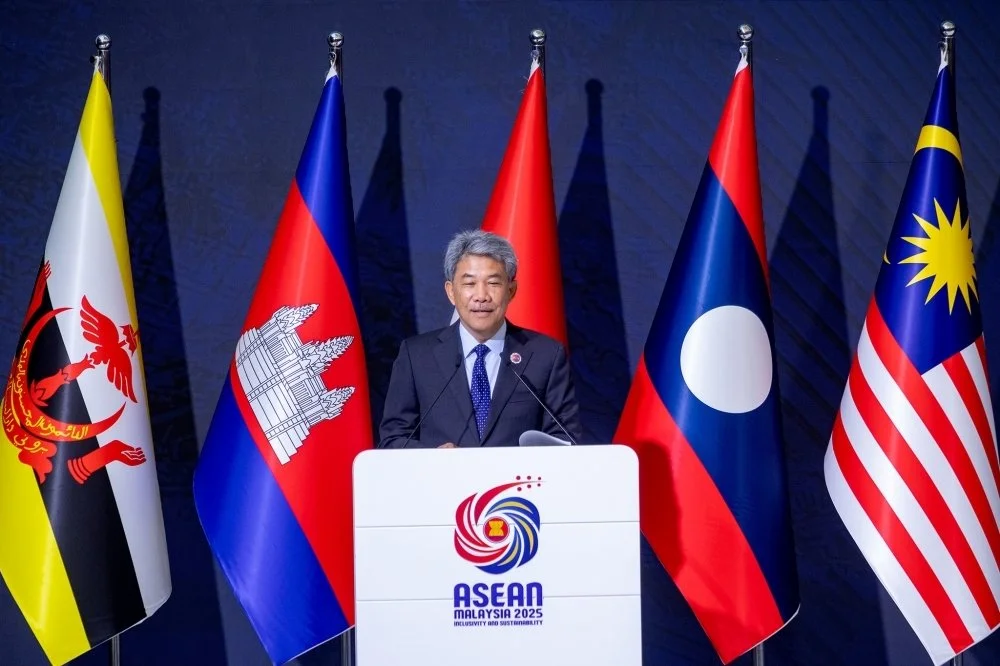
ASEAN Leads Response to the Threat of Global Economic Disorder
In an article for East Asia Forum, Shiro Armstrong discusses Trump’s “Liberation Day” tariffs and ASEAN’s response, where the latter avoided retaliation, which would worsen economic consequences, and instead communicated a coordinated, non-retaliatory response to the tariffs.

How First Wap Tracks Phones Around the World
In an article for Lighthouse Reports, researchers investigate a vast archive of data on the deep web, from a surveillance company called First Wap. Investigation shows how phone network collections can be leveraged to allow tracking all over the world, without authorization from the targeted networks.
Call for Collaborators on AI Governance in Southeast Asia
Haakon Huynh (Columbia University) is seeking collaborators for ongoing research on artificial intelligence (AI) governance in Southeast Asia. His recent working paper, “Digital Sovereignty or Dependency? The Political Economy of AI Infrastructure in Vietnam,” examines how Vietnam governs AI infrastructure amid growing foreign investment from firms like NVIDIA.
Haakon welcomes contact from scholars, practitioners, and students interested in AI policy, digital infrastructure, or the political economy of technology in the region.

ISEAS Perspective: Recalibrating Southeast Asia’s Climate and Energy Strategies Amid US Policy Shifts
In this paper published by NYSEAN Partner ISEAS – Yusof Ishak Institute, Angel Hsu and Silvia Landa discuss how the US government has withdrawn both domestically and globally from climate and clean energy engagement. This withdrawal has been marked by a dismantling of foreign development assistance, proposed rollbacks of the Inflation Reduction Act, and aggressive tariffs. They assert that these policy shifts undermine the possibility of bilateral clean energy and climate collaboration with Southeast Asian nations.
Talking Indonesia Podcast: A Re/writing History Project
In this episode of Talking Indonesia, the host is joined by Grace Leksana, an Assistant Professor in Indonesian history in the Cultural History section of Utrecht University. Together, they discuss the origins and concerns of the Minister for Culture and Education’s commission to rewrite the official Indonesian history textbook.
CSIS Podcast: Thai Politics Update with Ken Mathis Lohatepanont
In this episode of Southeast Asia Radio, produced by the Center for Strategic and International Studies (CSIS), Gregory B. Poling and Elina Noor are joined by Ken Mathis Lohatepanont to discuss the latest updates from Thailand, including the new Bhumjaithai-led government, the fate of the Shinawatras, and the snap elections scheduled in early 2026.