The Curious Case of the “America First” Trade Policy in Vietnam
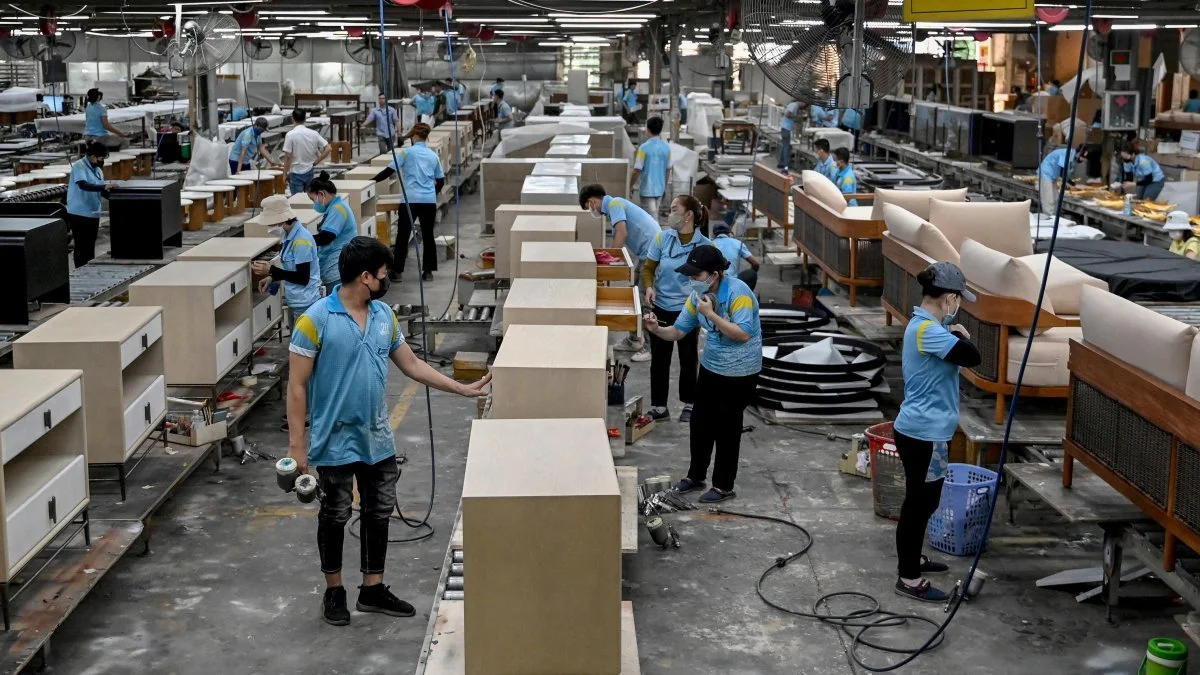
Photo: Nhac Nguyen/AFP/Getty Images
In an article for the Center for Strategic and International Studies (CSIS), Joseph Diamond discusses Vietnam’s bilateral trade surplus with the United States.
In the past year, as the Trump administration has taken action to implement its “America First” trade policy, Vietnam has found itself in an essentially unique and difficult position. On the one hand, it has one of the largest bilateral trade surpluses with the United States, smaller than only China and Mexico. On the other hand, it lacks China’s ability to successfully push back on strong U.S. action and Mexico’s privileged place as a member of the United States–Mexico–Canada Agreement, under which most trade has been exempted from U.S. tariffs.
Vietnam’s large bilateral trade surplus with the United States makes it a key target for action in the America First trade policy, the stated objective of which is to correct “unfair and unbalanced trade,” or large trade deficits, in U.S. trade flows. This has taken the form of Agreements on Reciprocal Trade (ARTs), under which a country makes significant market-opening concessions to the United States and commits to aligning its economic security measures with U.S. trade actions against China—while accepting high U.S. tariffs in return. Vietnam was assigned a 20 percent “reciprocal” tariff on top of preexisting U.S. tariffs under the International Emergency Economic Powers Act until it was overturned. The Trump administration is now seeking to apply the tariffs using other trade statutes.
Though Vietnam is in a similar position as its Southeast Asian neighbors in that it lacks significant negotiating leverage with the United States, it is much more exposed economically than any of these other countries: The U.S. trade deficit with Vietnam grew to $178 billion in 2025, far larger than any other Southeast Asian nation (the second highest, Thailand, had a deficit of $71.9 billion). Vietnam additionally lacks the ability to defray tariffs by pledging investmentin the United States that large Asian economies of Japan, South Korea and Taiwan have (as well as the European Union).