The Canon of Asian American Literature
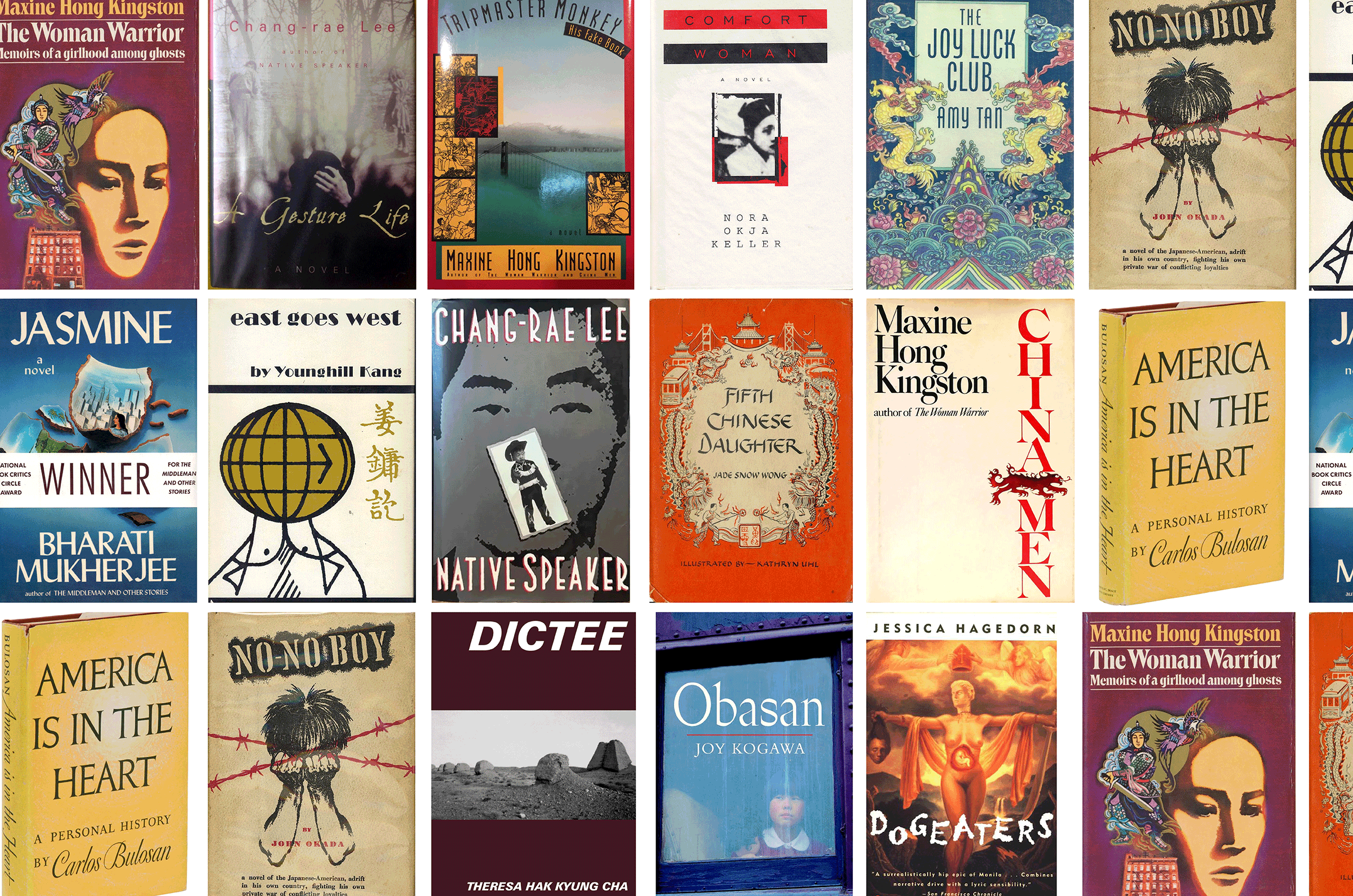
Most cited Asian American texts. Image designed by Nami Kurita.
In an article for Post45 Data Collective, Long Le-Khac created a 1,900-entry long database of Asian American literary canon. By gathering publications featuring the keyword “Asian American” or taking media from journals dedicated to Asian American studies, Le-Khac frames it as a chance for academics to audit what's considered the Asian American canon and see who might be missing or underrepresented.
In recent decades, the body of Asian American literature has grown dramatically.1 Scholarship on Asian American literature has also accelerated to catch up to this explosion of literary production (Lim et al.). Meanwhile, Asian American writers have entered the centers of American letters, winning numerous awards and climbing bestseller lists (Song). Given this prominence, no large-scale studies of contemporary American literature are complete without data on Asian American literature. Such studies, however, are hampered by the lack of expansive bibliographies and metadata that would allow scholars to identify and grasp the scope of Asian American literature. Older bibliographies of Asian American literature exist (Hiura and Sumida, Cheung and Yogi, Wong and Sumida), but they do not reflect the 21st-century explosion of literary production. The most recent bibliography (Xu) is larger but, as a print document, does not readily allow scholars to gather data for large-scale study. There’s a need for curated, accessible, and actionable metadata about the texts and authors comprising the growing body of Asian American literature.
This dataset addresses that need. Representing the canon that scholars of Asian American literature have built, it is the most expansive dataset to date on Asian American literature.2 It allows scholars to identify nearly 800 authors and nearly 1,000 texts that are part of the Asian American literary corpus and to bring into their analyses extensive bibliographic, biographical, and demographic information. The data is formatted so that scholars can search, sort, mine, analyze, and operationalize the data in ways not possible with print or proprietary digital bibliographies.
The dataset captures nearly 1,900 instances in which a primary text has been studied as an Asian American work. The dataset allows for tracking the scholarly attention of Asian American literary studies over time and examining the kinds of texts and authors the field has emphasized, making possible meta-critical study of how scholars of Asian American literature have constructed their object of inquiry. With this data, we can ask, how have the definitions, boundaries, and internal structures of this corpus transformed over time? How to define Asian American literature, where to draw its boundaries, and which groups have been included or excluded have long been central debates in the field (Koshy, Lowe, Chuh). These debates have often been theoretical. This dataset offers the chance to ground these debates in empirical examinations of the concrete corpus-building practices of scholars. On one important level, Asian American literature is the body of texts that have been discussed as Asian American by the hundreds of scholars who have helped institutionalize the idea of this literature. Publication by publication, scholars in Asian American studies have made choices about which works deserve attention as Asian American literature. These choices have accreted over decades into a canon that has shaped the idea of Asian American literature and bears systemic inequities. This shaping demands scrutiny. This dataset allows for that scrutiny.