The Artifacts We Inherit
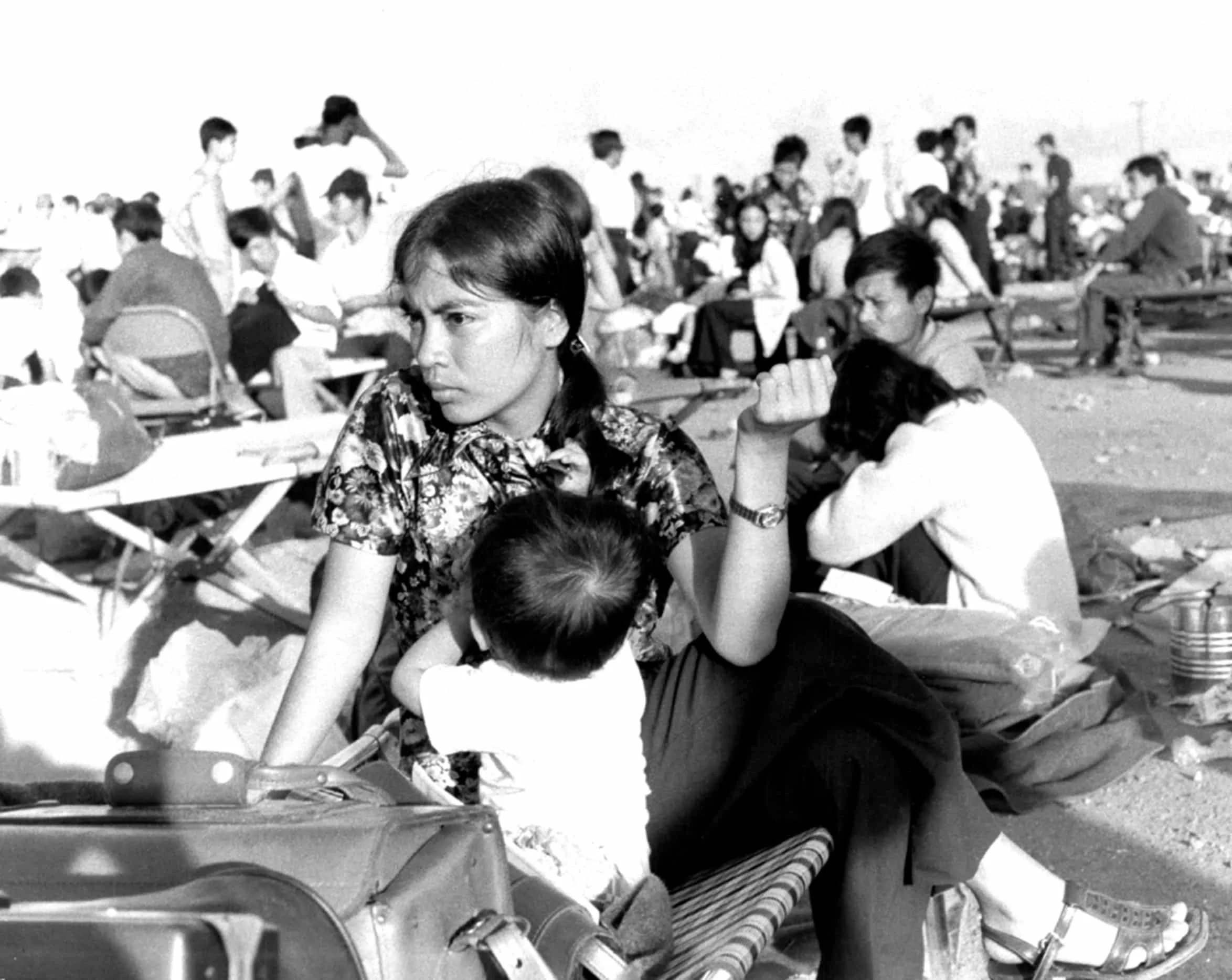
Photo of Hien Vu Kim and Nam C. Kim at “Tent City” at Orote Point, Guam, during Operation New Life. Taken by Chong S. Kim, May 1975.
In an article for the Henry Luce Foundation, Chris Welles writes about Dr. Nam C. Kim’s archaeological fieldwork stemming from the photographs his father took of his family escaping Vietnam in 1975. The Henry Luce Foundation highlights CSEAS Director Professor Nam Kim’s archival digital project: “Operation New Life Guam, USA 1975,” which is supported by the foundation’s Asia program.
When anthropological archaeologist Dr. Nam C. Kim pulls one of his father’s photographs from a family album, he is not just holding a picture. He is holding a history.
Today a professor of anthropology and archeology at the University of Wisconsin-Madison, Kim is the son of Korean father Chong S. Kim and Vietnamese mother Hien Vu Kim, who together fled Saigon in the spring of 1975 with their infant son by way of the U.S. Army’s Operation Frequent Wind—the codename referring to one of a series of overlapping operations resulting in the swift evacuation that April from the Republic of Vietnam (RVN, 1955–1975) of over 50,000 refugees via airlift and navy transport in the dramatic last days of the Vietnam War. The Kim family quit the capital just hours before it fell to the enemy.
Chong S. Kim was a photographer by trade. He photographed his family before the war, so it seemed only natural to continue that documentation throughout their escape and into their new life in the United States. Some of these photos, which Nam recently uncovered, were displayed in the family’s photo studio when they arrived in Durham, North Carolina. Others sat undisturbed for decades in boxed albums stashed in the family’s basement.
But over the last several years, the Kim family photos have met a new and distinguished destiny. More than family keepsakes, the photos are rare firsthand accounts, or artifacts, of an epic cross-cultural story, one that for too long had gone unappreciated. Nam explains: