Thai-Cambodian Dispute: Differing Configurations of Nationalism and Legitimacy
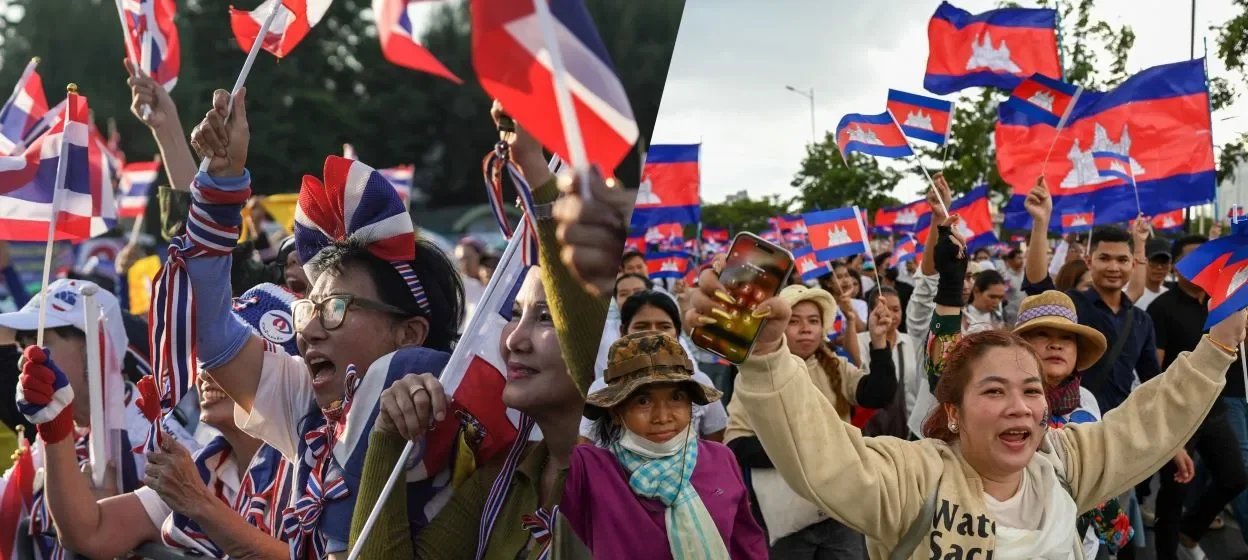
Thai and Cambodian peace protestors condemning the Thai-Cambodia Border conflict on August 2, 2025 | Photo Composite: Anusak Laowilas/NurPhoto via AFP (L) & TANG CHHIN Sothy/ AFP (R)
In an article for Fulcrum, Soksamphoas Im asserts that peace along the border of Cambodia and Thailand requires reconceptualizing the mobilization of nationalism, history, legitimacy on both sides.
Although Cambodia and Thailand reaffirmed a second ceasefire on 27 December 2025, the situation remains fragile. Restoring normalcy, both along the border and in diplomatic relations, will take time. The renewed clashes cannot be understood simply as a contested border dispute or a temporary diplomatic failure. While domestic political issues in both countries contributed to the initial violence in July 2025, the resurgence of military confrontation four months later reveals a deeper structural dynamic: the instrumentalisation of nationalism for domestic political survival in Thailand. This stands in contrast to Cambodia’s peace-oriented civic patriotism.
On 8 December 2025, Thailand launched airstrikes inside Cambodian territory following an incident in which two Thai soldiers were injured by a landmine. Thai authorities claimed the explosive device was newly laid in violation of the Kuala Lumpur Peace Accord signed on 26 October 2025. Using this allegation as justification, Bangkok escalated military operations and delayed the release of 18 Cambodian soldiers captured during the July clashes — moves that undermined the spirit of the ceasefire even if they did not formally abrogate it.
Senior Thai officials’ rhetoric pointed toward escalation rather than restraint. Thailand’s foreign minister stated publicly that “military action would continue until sovereignty and territorial integrity were no longer challenged,” while the army chief of staff was quoted in Thai media as declaring an objective to “render the Cambodian military ineffective for a long time.” This language goes beyond deterrence or border defence. It implies long-term military degradation of a weaker neighbour and reflects a persistent centre-periphery logic within Thai strategic culture, where Cambodia is often treated less as a sovereign equal than as a manageable frontier problem.