Bending a Dark Arc Toward Justice
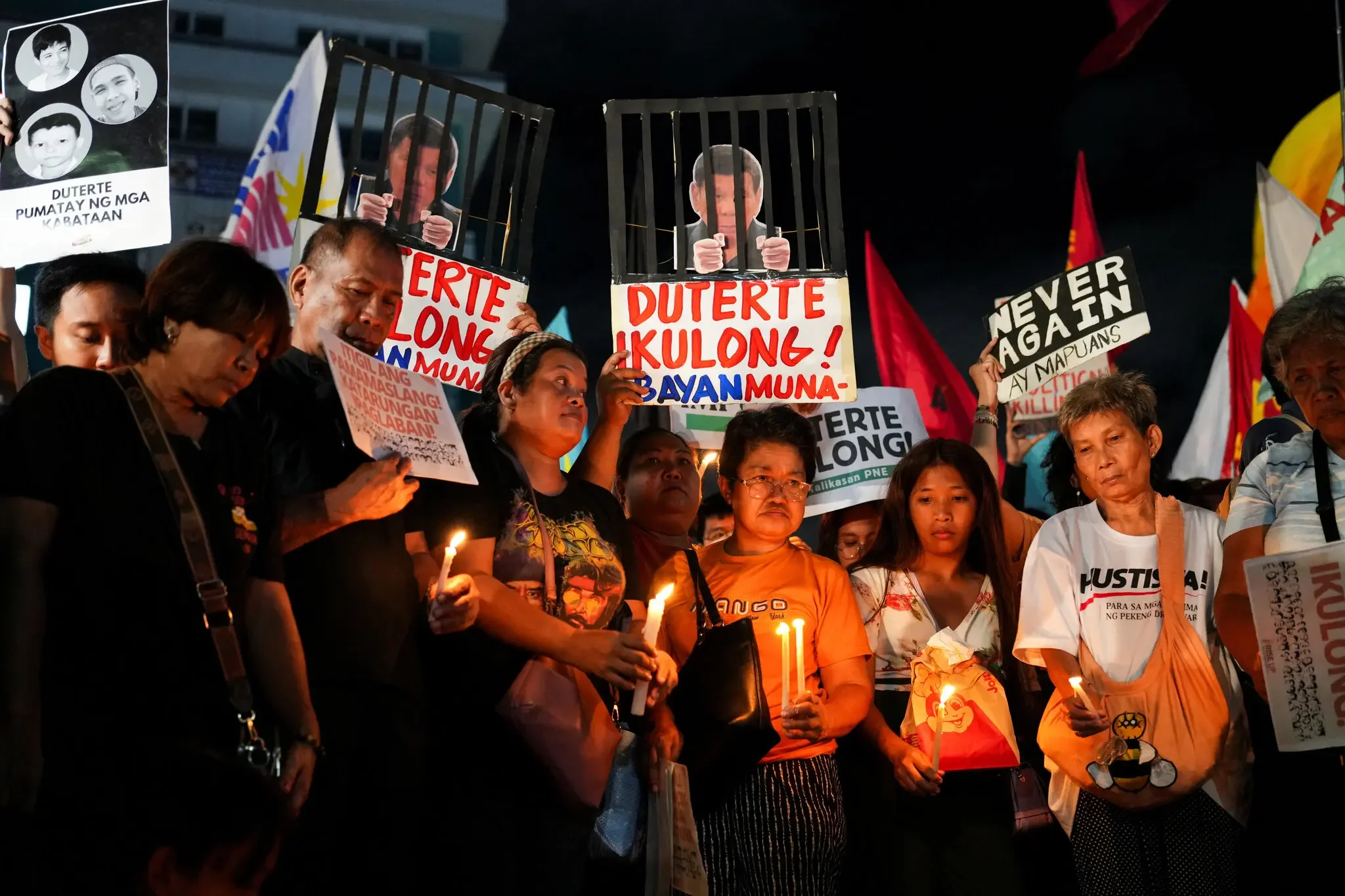
Filipino activists at a protest vigil supporting the arrest of former President Rodrigo Duterte. In March, the International Criminal Court issued the warrant, accusing him of crimes against humanity | Photo: Peter Blaza/Reuters
In an article for The New York Times, Gina Apostol reflects on former President Rodrigo Duterte of the Philippines being arrested on a warrant issued by the International Criminal Court.
The day I learned of the arrest of Rodrigo Duterte, the former Philippine president who is now awaiting trial on charges of crimes against humanity at the International Criminal Court, I was teaching Philip Roth’s “The Plot Against America” in New York. As my students connected Roth’s fascist America to our times, wondering about their role, I told them Duterte’s arrest meant it was vital to resist. I said, don’t just take Roth’s prescient imagination for it: The fruit of a people’s resistance is happening in real time.
In March, Filipinos were transfixed online as they followed the flight path of Duterte’s plane from Manila to Dubai to The Hague, bending toward possible justice. His arrest and extradition were thrilling because, after years of impunity, he was finally set to be prosecuted for the extrajudicial killings of an estimated 30,000 people during his so-called war on drugs. Although the I.C.C.’s caseoutlines how these killings — bounty hunts for which policemen allegedly gained bonuses — were part of a nationwide, and effective, presidential directive, Philippine courts have yet to deliver justice for the vast majority of victims.
This watershed moment in international justice comes from the yearslong work of ordinary Filipinos who braved the state’s violent machine to challenge a popular, albeit killer, ruler. Churches protected widows; lawyers died taking cases to court; journalists nightly documented package-taped corpses dumped on streets; photographers kept vigil. In the journalist Patricia Evangelista’s powerful book, “Some People Need Killing,” an 11-year-old watches vigilantes kill both her parents; an “addict” lives through a grandchild’s collateral death; neighbors risk lives to speak up; gunmen talk. The I.C.C. document’s plain language implies this bold witness of orphans, activists, repentant assassins. Key is the confession of a hit man whom nuns, priests and even military personnel kept in safe houses for years so he could tell his story — and name names in The Hague.