Timor-Leste’s Search for Growth Beyond Oil
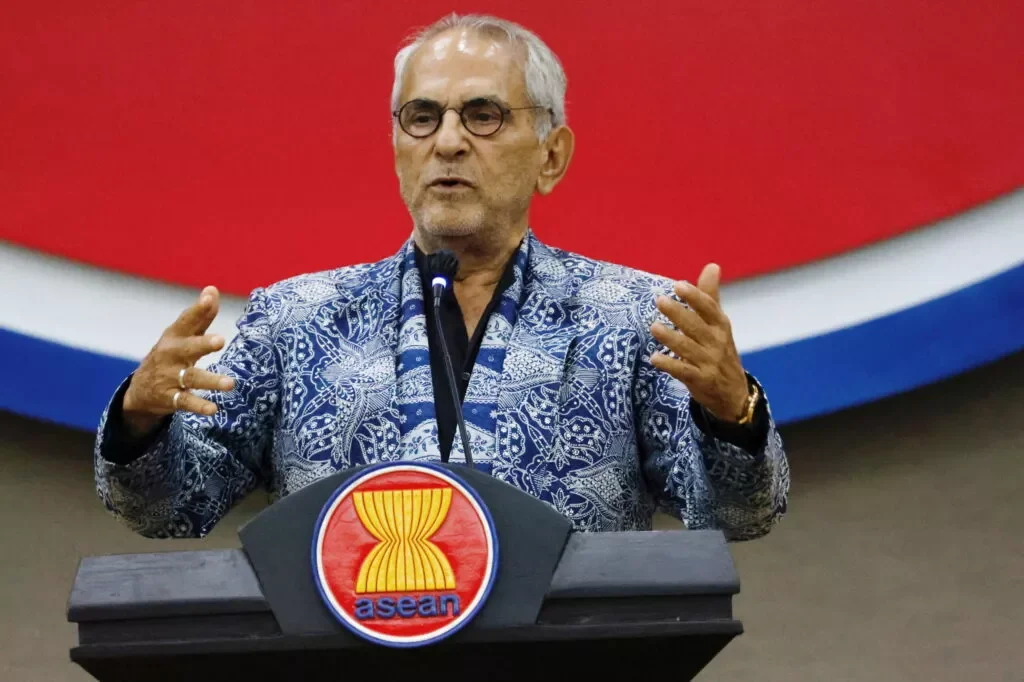
Timor-Leste President José Ramos-Horta said that Asean must stay united and act as a bridge between global powers to prevent escalating tensions in the South China Sea and to help resolve the ongoing crisis in Myanmar | REUTERS
In an article for East Asia Forum, Heidi Arbuckle asserts that Timor-Leste’s 2025 accession to ASEAN was a diplomatic milestone, but the shutdown of the Bayu-Undan gas field has intensified pressure to diversify an economy long reliant on petroleum revenues. Rising remittances and labour mobility, renewed civic activism over public spending and pensions, ongoing land disputes and cautious optimism around tourism and reform mean 2026 will be critical in determining whether the country can build a more resilient economic future.
Timor-Leste’s accession to ASEAN was a high point in 2025 that sowed regional confidence. But the economic stakes have never been higher for the small island nation, whose economy now depends almost entirely on withdrawals from its US$18.95 billion Petroleum Fund.
Non-oil economic growth saw positive developments in 2025, including increased revenue from remittances. At home, long-standing issues related to government spending and land reform sparked renewed social unrest. The year 2026 will be pivotal, with the government’s ability to accelerate structural reforms and diversification critical to determining Timor-Leste’s economic future.
The June 2025 announcement of the shutdown of Timor-Leste’s Bayu-Undan gas field, the main source of revenue in the country for two decades, intensified long-standing debates about Timor-Leste’s economy. With Bayu-Undan having stopped producing significant revenue prior to 2025, Timor-Leste became, for the first time, dependent on investment income from its Petroleum Fund.
Negotiation of the Greater Sunrise oil and gas project off the country’s south coast remains the government’s foremost priority. But whatever happens with Greater Sunrise, Timor-Leste is under pressure to make the structural reforms needed to secure its economic future. With approximately 73 per cent of the state budget projected to be funded by the Petroleum Fund in 2025, these reforms must include diversifying Timor-Leste’s economy and boosting domestic revenue.