Bangkok Seeks to Spearhead ASEAN Re-engagement with Myanmar
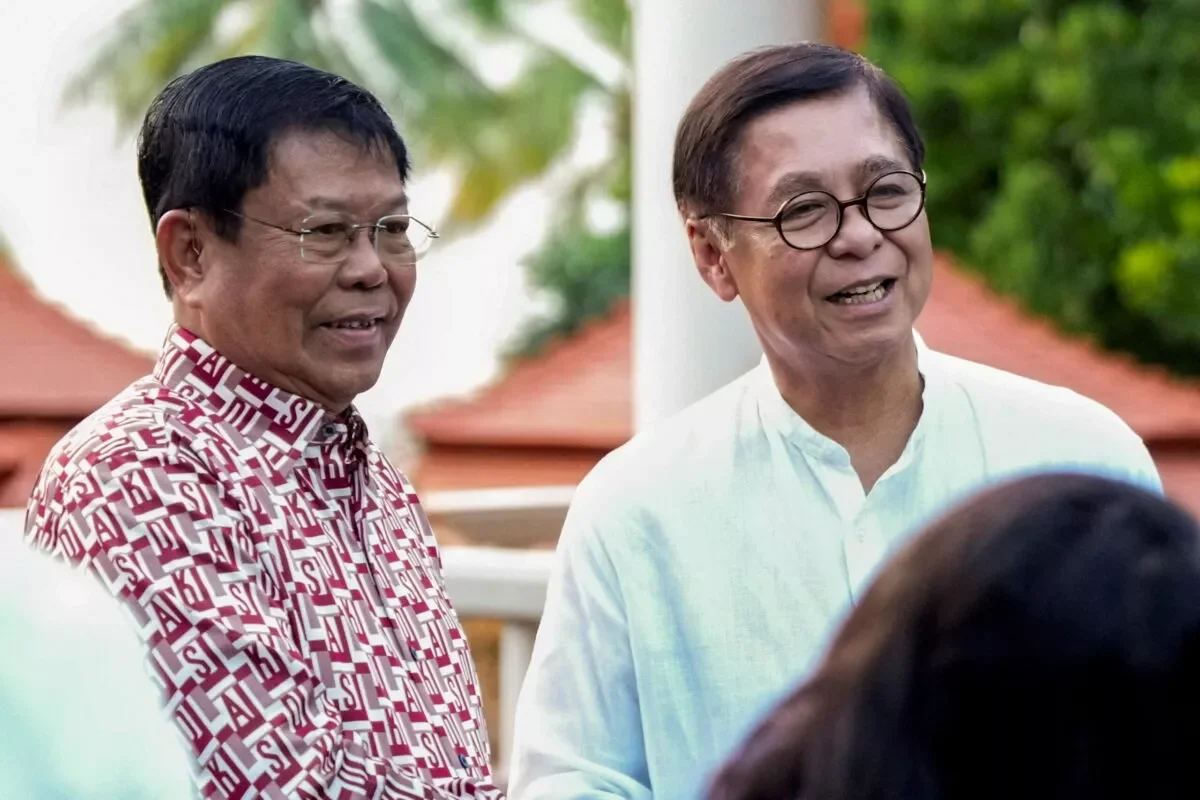
Myanmar's Foreign Minister Than Swe and Thailand's Foreign Minister Sihasak Phuangketkeow react after bilateral talks, to discuss the way forward in Thailand-Myanmar relations and Myanmar relations with ASEAN following Myanmar’s general election earlier this year, in Phuket, Thailand, February 18, 2026 | Photo: REUTERS/Pattarakrich Kittitananithi
In an article for East Asia Forum, William J. Jones asserts that Thailand’s approach for re-engaging with Myanmar is a pragmatic path for restoring diplomatic engagement with Myanmar ahead of chairing ASEAN in 2028.
Thailand, looking ahead to its 2028 ASEAN chairmanship, is moving towards greater constructive engagement with Myanmar. Bringing ASEAN behind this approach will not be easy, given member states’ differences over how to deal with Myanmar’s military government. But with ASEAN’s current approach yielding little progress, Thailand sees deeper regional engagement as the most plausible path to a limited return to stability and normalcy for its neighbour.
ASEAN’s initial response to Myanmar’s 2021 coup gave the appearance of regional solidarity, despite underlying disagreement over the way forward. At an emergency summit in April 2021, ASEAN leaders agreed to institute a Five-Point Consensus, calling on Myanmar’s military government to de-escalate the crisis. The consensus envisaged engagement with the opposition, the Troika of past, present and incoming ASEAN chairs, and the ASEAN Secretary-General.
The positions among ASEAN member states after the coup can be broadly divided into three groups. The strongest opposition to engagement came from Indonesia, the Philippines and Singapore. The junta government found its strongest support from Cambodia, Laos and Vietnam. Malaysia and Brunei were supportive of constructive and conditional engagement.
Since Thailand’s February 2026 election, its new government led by Prime Minister Anutin Charnvirakul has also shifted towards constructive re-engagement, coinciding with deeper changes within ASEAN. Indonesia has maintained its position of not legitimising the elections. The Philippines, as ASEAN Chair, is advocating for engagement and trying to find a common position for dialogue. The most strident positions are occupied by Singapore and ASEAN’s newest member, Timor-Leste. Timor-Leste has openly denounced the military government, while its legal authorities have initiated proceedings against junta officials for alleged war crimes and crimes against humanity.