ASEAN Hedges with Pax Silica
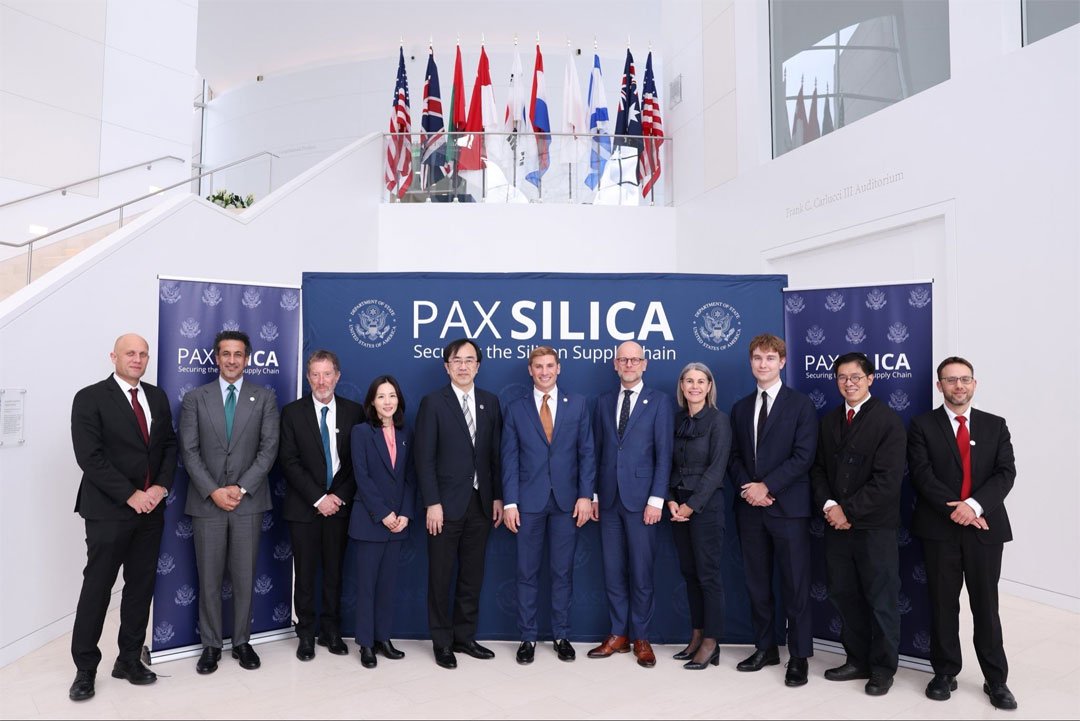
The Pax Silica Summit is a historic gathering of nations at the forefront of the global AI supply chain | Office of the Under Secretary for Economic Affairs, US Dept. of State Official LinkedIn Page
In this article published by the Asia Society Policy Institute (a NYSEAN Partner), Faye Simanjuntak explores how ASEAN is navigating the United States’ Pax Silica initiative. She asserts that the region is currently hedging its bets, though ASEAN’s new Digital Economy Framework Agreement (DEFA) may provide a platform for the region to negotiate terms as a bloc.
While Singapore and the Philippines are the only Pax Silica signatories from Southeast Asia, the 2026 ISEAS survey on Southeast Asian opinions shows divergent logic behind each of their decisions. The Philippines has always been the most skeptical of China within ASEAN: 76.8% of respondents would pick the United States over China if forced to choose, and it’s the only member state expecting its China relations to worsen over the next three years (55.0%). In this sense, Manila likely saw signing onto the agreement as an easy optical win in terms of engagement with the U.S., bolstering the Philippines’ existing security positioning.
Singapore’s decision to sign onto Pax Silica makes less sense in the context of the ISEAS survey but more sense when considering its greater hedging strategy. Based on the survey, 66.3% of Singaporean respondents picked China over the United States in the same question of forced choice this year, up from 47.1% in 2025. Public opinion in Singapore is largely driven by the nation’s trade patterns: China is one of Singapore’s largest trading partners, while the U.S. falls behind. Further bifurcation in support levels between the U.S. and China is likely due in part to increasing anxiety surrounding tariffs and general instability projected by the Trump administration. At the same time, Singapore maintains a strong security relationship with the United States: the two countries have administered a joint military exercise since 1981, and a defense pact that allows American forces to use Singapore’s air and naval bases. For a country balancing a Chinese-leaning economic partnership with an American-leaning security partnership, signing Pax Silica is a low-cost move to stay in favor of both countries by not overcommitting to China.