ASEAN Must Rely on Itself and Japan
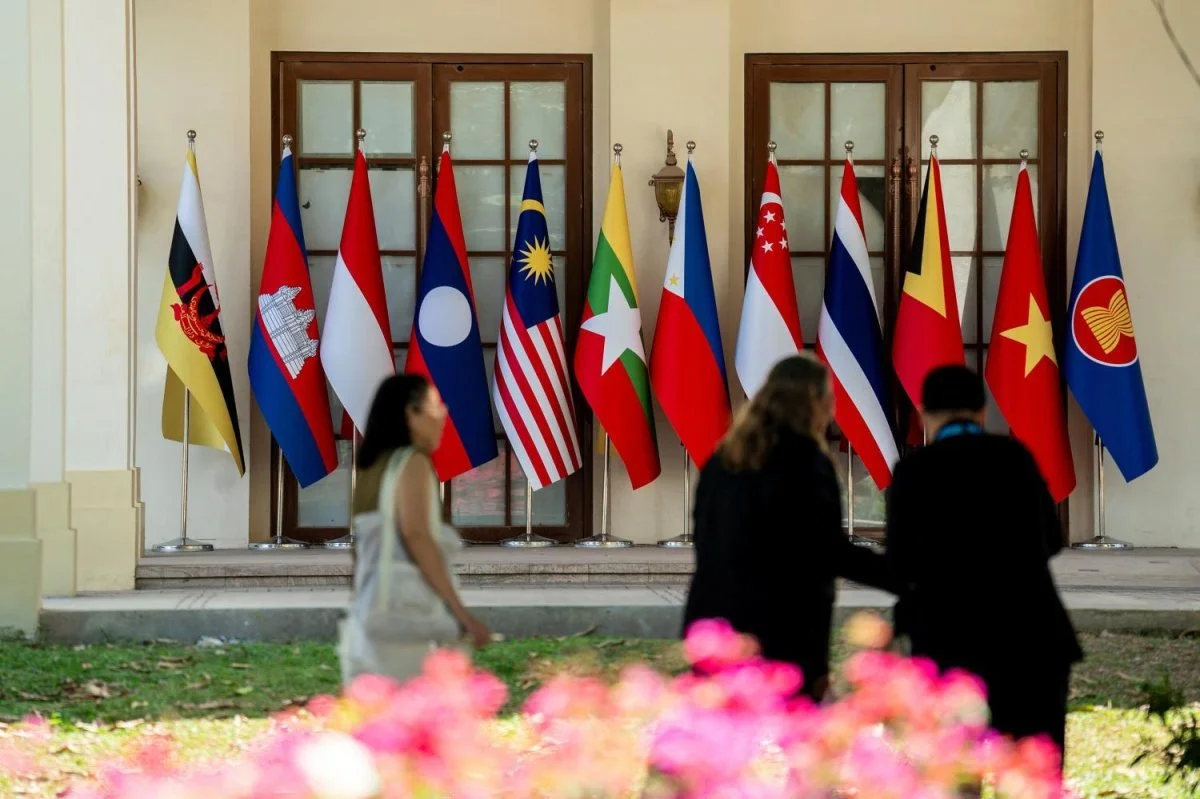
This photo, dated May 8, shows people walking towards the flags of the Association of Southeast Asian Nations (ASEAN) member states during the 48th ASEAN Summit and Related Meetings in Cebu, Philippines | Photo: Reuters
In an article for Bangkok Post, Thitinan Pongsudhirak asserts that ASEAN nations must rely on each other and middle powers such as Japan due to increasing tensions between China and the United States.
It sounds somewhat paradoxical to think that ASEAN is more internally problematic than ever, and yet the 11-member Southeast Asian bloc also needs to rely on itself like never before. But such is the tough reality in Thailand's regional neighbourhood. Under pressure from both the United States and China, ASEAN will also have to rely on external partners, particularly Japan, to navigate and overcome the adverse challenges on the horizon.
ASEAN today is similar to its past. The region is divided and weakened by superpower competition and conflict. In the past, the Soviet Union and the United States, during the Cold War, divided Southeast Asia between ASEAN and Indochina. Today, it is the United States and China in a new kind of Cold War that is pressuring ASEAN member states to choose sides. When the great powers are not at relative peace and in relative balance, they tend to pick the region apart for their own self-interests.
As a result, ASEAN somehow must maintain its central organizing role -- known as "ASEAN centrality" -- in promoting and securing regional peace and security by continuing to act as a "buffer, bridge and broker" among the great powers in the region. For the past three decades, ASEAN benefited from a relatively favourable external environment. Globalisation expanded trade and investment. Major-power competition was manageable. Supply chains became increasingly integrated. Economic growth was robust. Today, that environment is changing.
The international system is becoming more fragmented. Strategic competition among major powers is intensifying. Trade and technology are increasingly impacted by geopolitics. Economic security and national security are becoming closely intertwined. Consequently, ASEAN faces pressures from multiple directions.