
Organizer: Council on Southeast Asia Studies, Yale University
Type/Location: In Person / New Haven, CT
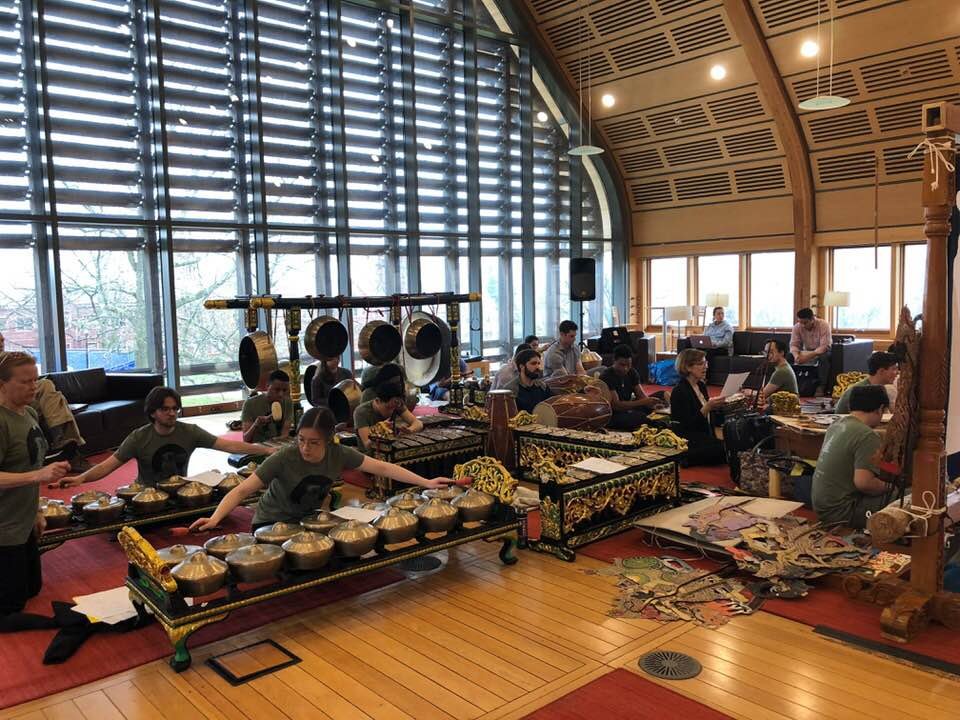
Description:
Spontaneity and flexibility are core musical principles of Javanese Gamelan. A musician’s ability to garap, or interpret, the repertoire is considered essential. In the context of a beginner gamelan course, this central aspect of the tradition is one of the most challenging to impart. While some students may have experience with improvisatory musics, the cues and signals inherent in gamelan are entirely new. In this presentation, I’ll discuss how the gamelan courses at Yale tackle this challenge in two musical contexts, klenèngan (concert music) and wayang (shadow plays). Whether we succeed or fail, as we have many times, the experience is a rich one and the group always emerges stronger. Students members of the Yale gamelan ensemble will assist in a demonstration.

About the Speaker:
Phil Acimovic is a gamelan musician and composer from Easthampton, MA. Acimovic studied Javanese Gamelan in Surakarta, Indonesia for two years with master musicians Bp. Wakidi Dwidjomartono and Bp. Darsono Hadiraharjo. He also worked closely with Bp. Darsono, Bp. Yadi Tejapangrawit, Bp. Midiyanto, and Barry Drummond. Acimovic currently directs the Yale Gamelan Ensemble, the Smith College Gamelan Ensemble, and Gamelan Lebdo Budoyo, a community gamelan group in Western, MA. In 2018 he organized and managed the tour of Ngudi Raras, a gamelan gadhon troupe from Java, giving concerts and workshops at institutions across the U.S. He also served as editor for Gamelan Scores: Javanese Wayang Kulit Tales in Three Dramatic Styles, a part of the Lontar Foundation’s Wayang Educational package.
Registration:
To attend the event in person, please register here.
The room can accommodate a maximum of 20 participants. Attendance will be granted on a first come, first served basis to the first 20 people who register. This session will include a live demonstration. Please note that seating will be on the floor/ground.