
Organizer: Southeast Asia Program, Cornell University
Type/Location: In Person / Ithaca, NY
Description:
What and where is “Maritime Southeast Asia”? In this Gatty Lecture, maritime scholar Dr. Liang Wu presents a case study of Filipino among other Southeast Asian seafarers working in the international shipping industry across the global oceans, thus expanding the conventional definition of “Maritime Southeast Asia” – the archipelagic region of Southeast Asian countries situated between Indian and Pacific Oceans.
At this moment, hundreds of thousands of Southeast Asians are circumnavigating the world as they work on ocean-going merchant vessels of contemporary shipping, delivering 90% of international trade and sustaining economies and societies around the globe. The majority of the world’s 2 million seafarers come from the Global South regions of Southeast Asian countries such as the Philippines, Indonesia, Myanmar, and Vietnam, alongside China and India. Due to their long contracts and cyclical employment, most of these Southeast Asian workers spend their lives on the high seas beyond national jurisdictions, under flag-of-convenience states such as Panama, Liberia, and the Marshall Islands, and within the foreign territories of port states – all beyond the definitional region of “Maritime Southeast Asia”.
Through learning about the lifeworlds and lifeways of Southeast Asian seafarers, Dr. Wu will discuss in this Gatty Lecture a range of critical topics from containerization to postcolonialism, familism, the social infrastructures of maritime ministries, and also industrial- environmental externalities. In tracing the far-reaching and uneven conditions and ramifications of such maritime metageography of sea trade, Dr. Wu’s work shifts analytical attention from regional seas, ports, and littoral societies to transoceanic labor, nodes, and networks; it advances a labor-centered and mobility-political approach to study the “maritime Southeast Asian” aspects of the global archipelago – one constituted not only by circulation and connectivity, but also by routinized absence, spatial confinement, juridical ambiguity, social invisibility, and integral accidents.
In the aftermath of the COVID-19 global pandemic and as supply chain disruptions continue to erupt, Dr. Wu’s redefinition carries urgent implications for how we conceptualize maritime regions, essential labor, and the social foundations of global logistics and human condition.
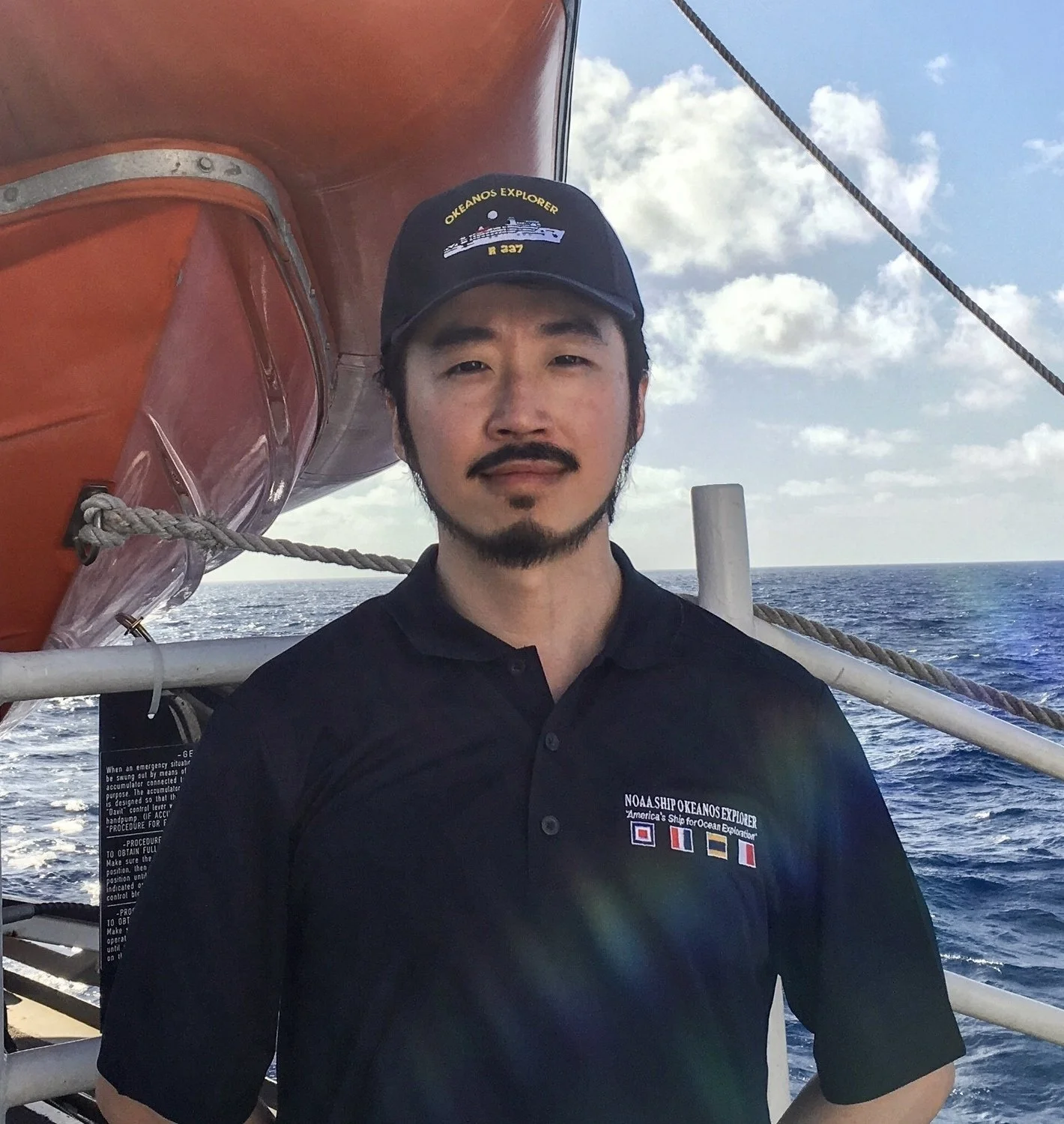
About the Speaker:
Dr. Liang Wu is a SEAP Postdoctoral Associate at Cornell University. He is also affiliated with the Department of Science & Technology Studies and the interdepartmental consortium Cornell Oceans. Dr. Wu started studying the international shipping and seafaring industry in 2006, and has carried out research at ports in Asia and the U.S., onboard, and online. Dr. Wu received his Ph.D. in anthropology from the Graduate Center, City University of New York. His interdisciplinary maritime work has been supported by the National Science Foundation, Social Science Research Council, Wenner-Gren Foundation, Center for Engaged Scholarship, and Ralph Bunche Institute for International Studies among other funding agencies. Overall, Dr. Wu is an engaged scholar who examines the intersection of maritime economy, blue humanities, social oceanography, and marine policy. He is a former Visiting Assistant Professor at Bates College enhancing ocean literacy and ocean engagement in Maine, and a Marine Policy and Science Communication Knauss Fellow at the National Oceanic and Atmospheric Administration. Dr. Wu also belongs to various national and international working groups and professional associations such as Waterfront Alliance, Deep-Ocean Stewardship Initiative, United Nations Ocean Decade Global Stakeholder Forum, Climate Change Interest Group (CCIG) of the American Anthropological Association, and American Association for the Advancement of Science.
Registration:
To attend the event in person, please register here.