
Organizer: Annenberg School for Communications, The University of Pennsylvania
Type/Location: In Person / Philadelphia, PA
Description:
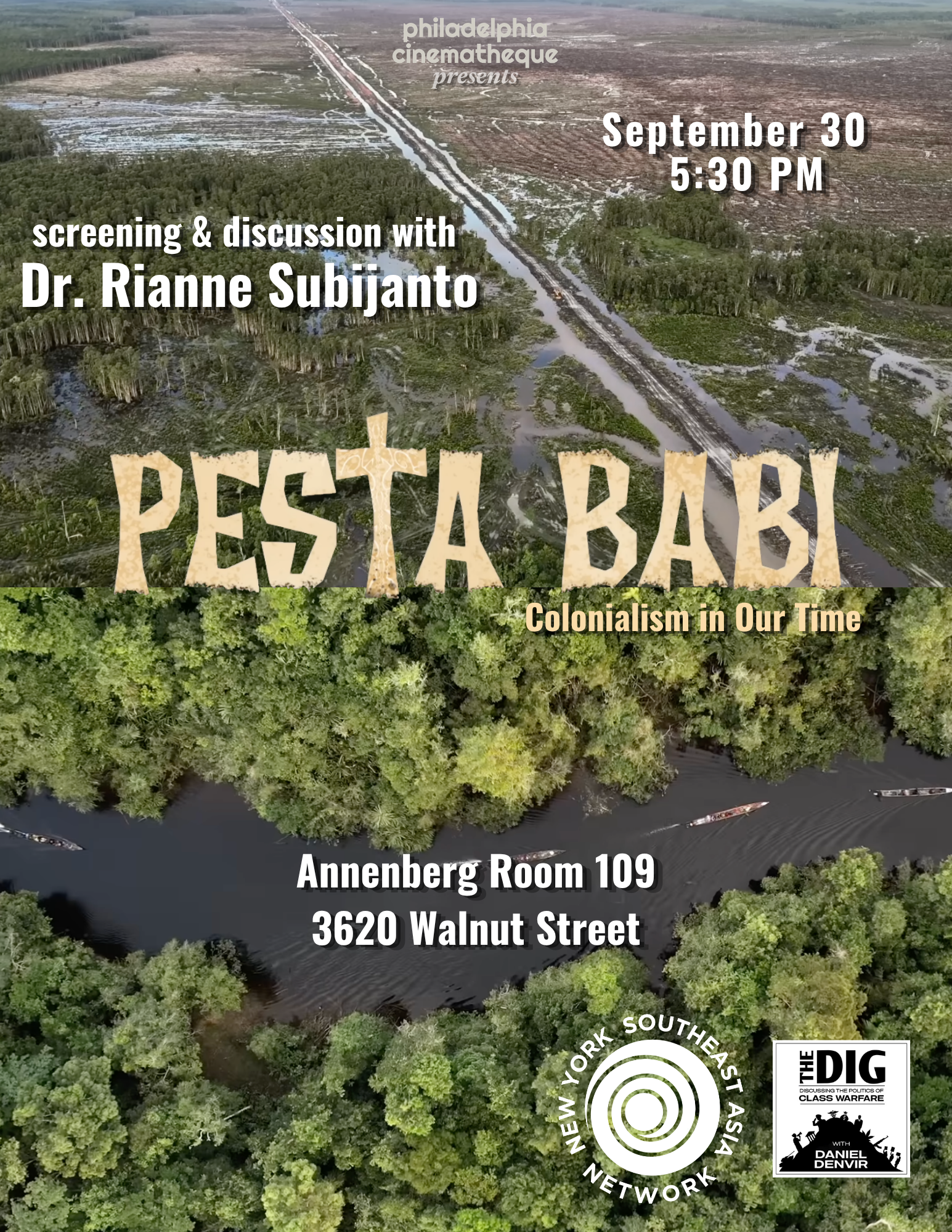
Join us for a screening of Pesta Babi (Pig Feast) directed by Cypri Dale and Dandhy Laksono. This investigative documentary exposes the human cost of the world’s largest forest-conversion project: 2.5 million hectares of Papua turned into biofuel plantations. The screening will be followed by a discussion about the film and The Dig’s Nusanatara podcast series with Professor Rianne Subijanto, associate professor of Communication Studies at Baruch College and the Graduate Center of The City University of New York.
This screening is a part of The Philly Cinematheque, a new initiative housed in the Annenberg School for Communication. It brings a community-focused approach to an eclectic program of global film and television screenings. In doing so, it functions as both an informal gathering place and an intentional intervention to further embed cinema—as a modality, a space, and a method—in communications scholarship.
This event is co-organized with New York Southeast Asian Network (NYSEAN) and The Dig podcast.
About the Film:
Pig Feast: Colonialism in Our Time/Pesta Babi: Kolonialisme di Zaman Kita is an Indonesian investigative documentary directed by Dandhy Dwi Laksono and Cypri Paju Dale.
The film highlights the bitter struggle of Indigenous communities in the South Papua region—particularly the Marind, Yei, Awyu, and Muyu peoples—whose living spaces are threatened by large-scale land exploitation.
Using a documentary approach, the film shows how customary forests, which have long served as the source of life for local communities, are being transformed into industrial zones. This marks one of the largest modern deforestation projects in the world. Audiences are invited to witness the conflict between “economic development” and the survival of Indigenous culture, identity, and living spaces in Papua.
About the Speaker:
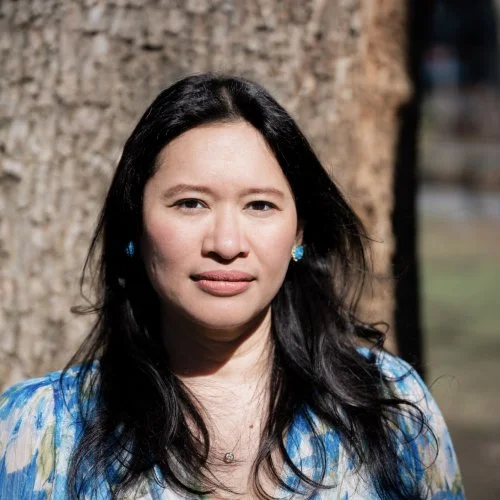
Rianne Subijanto is an associate professor in the Department of Communication Studies at Baruch College and the Graduate Center of The City University of New York. As a media historian of Southeast Asia specializing in Indonesia, her research explores global communication in the context of nineteenth- and twentieth-century colonialism and capitalism, showing how technologies, infrastructures, and communicative practices are deeply entangled with power, labor, and ecology. Broadly, her work contributes to debates on democratic communication, global media, and the critical theory and history of capitalism, while foregrounding struggles for universal emancipation as well as social and environmental justice.
Her first book, Communication against Capital: Red Enlightenment at the Dawn of Indonesia (Cornell University Press, 2025), examines how enlightenment ideals and communist ideas intersected in shaping the emancipatory spirit that fueled the pergerakan merah, the anticolonial “red movement” of 1920s Indonesia. Grounded in critical media studies’ concern with everyday practices, it recovers the stories of lower-class women, children, and people of diverse racial and ethnic backgrounds who resisted Dutch colonialism through multiple arenas of communication—political associations, assemblies, print culture, schools, and shipping lines. In these struggles, existing communication technologies were repurposed as instruments of anticolonial and anticapitalist resistance. The book demonstrates that the innovative techniques of the pergerakan merah shifted anticolonial mobilization in Indonesia from warfare to modern forms of communication. She is a co-editor of The Indonesian Left in the Twentieth Century: Beyond the Rise and Fall of a Party (with Lin Hongxuan and Klaas Stutje; Leiden University Press, 2026).
Registration:
To attend the event in person, please register here.