Waste Colonialism is Alive in Southeast Asia
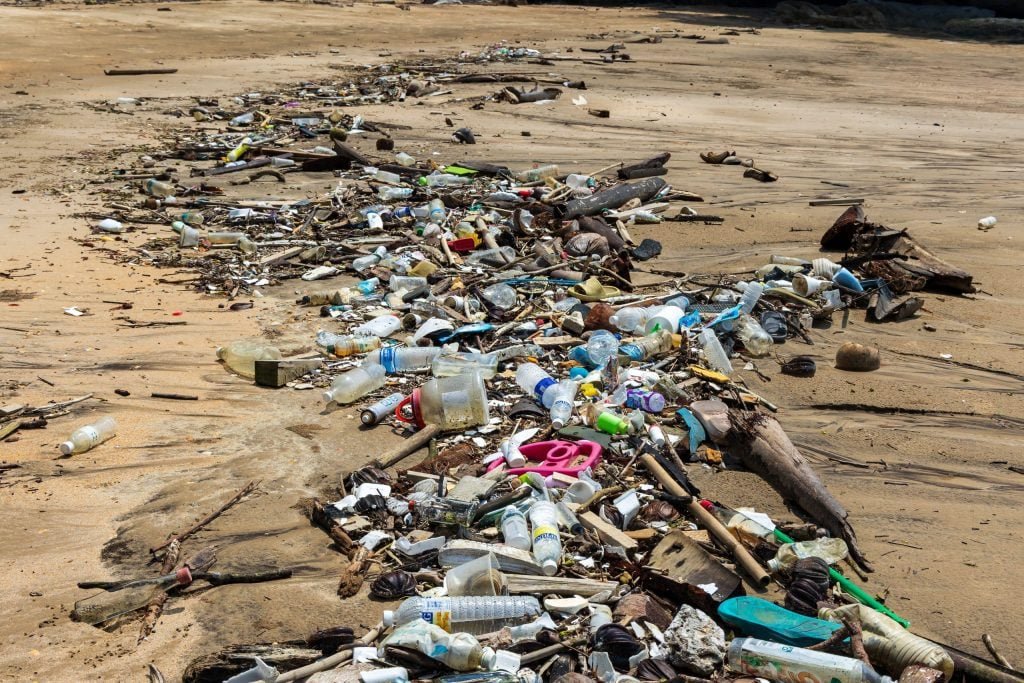
Plastic waste washed up on a beach in Sarawak, Malaysia. The country and some of its regional neighbors have implemented bans on plastic waste imports, but experts fear this will lead to a reshuffling of waste to countries with weaker restrictions, perpetuating the cycle of “waste colonialism” | Image: RDW Environmental / Alamy via Dialogue Earth
In an article by Mekong Independent, Isa Lim asserts that Southeast Asian nations are struggling with plastic waste imports from wealthier countries, which has contributed to environmental and health harms, and that bans on global plastics have failed to address “waste colonialism” in the region.
In August 2025, Malaysian campaigner Wong Pui Yi stood outside the UN headquarters in Geneva and made an appeal to Global North nations: “Stop treating the Global South as the rubbish bin for plastic waste you cannot handle.”
During that meeting, representatives from 184 countries failed to reach an agreement on a treaty to end plastic pollution. But the need for one has not gone away, particularly for Southeast Asian nations.
The region became the top destination for plastic waste imports following a solid waste import ban by China in 2017. Imports remain at a higher level in some of the region’s countries, according to data from UN Trade and Development. Data from the OECD, a group of mostly high-income countries, found that Malaysia, Indonesia and Vietnam remained the top non-OECD export destinations for waste from OECD countries in 2023.