Chokepoint in the Gulf: What the US-Israeli War on Iran Means For Southeast Asia’s Food Security
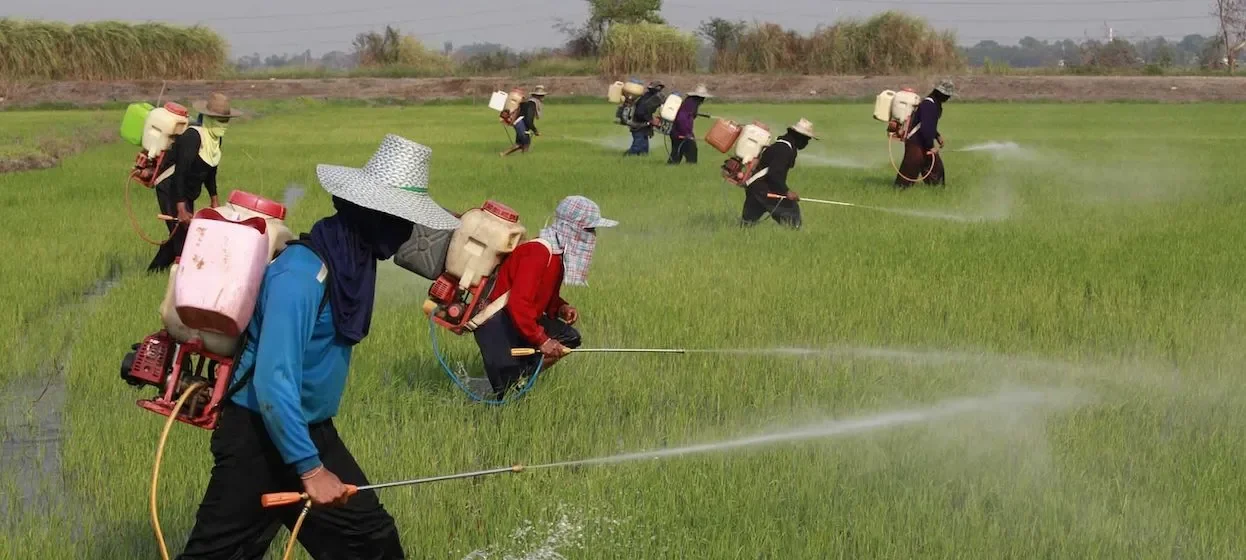
Rice farmers spray fertiliser in paddy fields in Wang Noi district, Ayutthaya, Thailand | Photo by Thiti Wannamontha / Bangkok Post / Bangkok Post via AFP
In an article for Fulcrum, Elyssa Kaur Ludher and Paul Teng assert that the effective closure of the Strait of Hormuz could push ASEAN’s farmers and food prices to the brink, but the region has options to ease some of the pressure.
The US-Israel attacks on Iran since late February and the wider fallout in West Asia have choked energy and fertiliser supply chains. The war has largely forced the closure of commodity manufacturing plants and halted shipping exports from the region, locking up about 20 to 30 per cent of the world’s oil and liquefied natural gas (LNG) and one-third of globally traded fertilisers. Qatar’s force majeure declaration on LNG (Qatar supplies around a fifth of global LNG) has further squeezed nitrogen fertiliser production elsewhere. Concurrently, airlines are rerouting flights to avoid the Gulf conflict zones, which has increased aviation fuel costs, raising the cost of air-flown goods.
Beyond the 60 million people in the Gulf, the shock is raising food insecurity worldwide: higher energy prices, which already account for about half of food costs, will push up production, storage and logistics bills. Furthermore, the rising prices of fertiliser today will see farmers cutting back on fertilisers, leading to lower yields and tightening markets. While urea fertiliser prices have not yet reached the heights of when Russia invaded Ukraine in 2022, they may do so in the coming months, having already risen by more than 50 per cent since the start of this year.
For Southeast Asia, these global shocks matter because the region is highly exposed as a net energy importer, with Singapore, Thailand, the Philippines and Vietnam among the most reliant on imported oil and gas. Regional countries are heavily dependent on imported fertilisers, especially phosphates and urea. Cambodia, Laos, Myanmar, the Philippines and Thailand are the most dependent on imported nitrogenous fertilisers in Southeast Asia.