Using Indigenous Sonic Entanglements to Advance Indonesia’s Emerging “Forest City” Vision
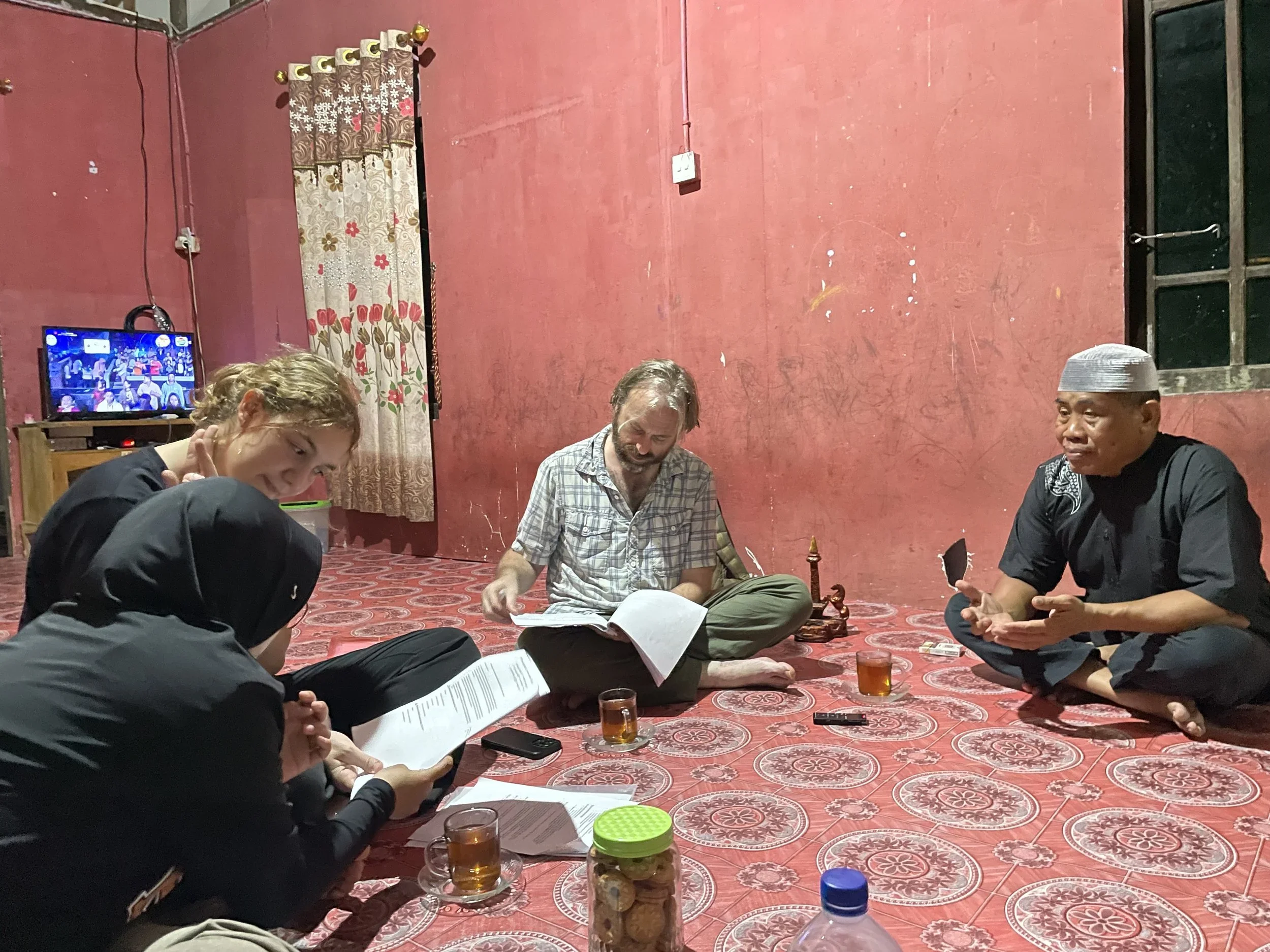
Walker DePuy of the Asia Research Institute, National University of Singapore conducting fieldwork in Nusantara, Indonesia
This article features Walker DePuy, one of AIFIS’s research fellows, who reflects on his research on Indigenous knowledge, sound, and sustainable urban features in Nusantara, Indonesia.
Meet Walker DePuy, Asia Research Institute, National University of Singapore, who shares reflections from his research on Indigenous knowledge, sound, and sustainable urban futures in Indonesia’s emerging capital, Nusantara.
During his AIFIS-supported fieldwork from May to July 2025, Walker DePuy conducted multi-sited ethnographic research in Jakarta and East Kalimantan to examine how Indigenous knowledge and sensory ways of knowing (particularly through sound) can inform Indonesia’s emerging “forest city” vision in Nusantara.
The research focused on understanding “more-than-human” and multi-species relationships embedded in Indigenous, place-based knowledge systems. By emphasizing sound as a key mode of environmental perception, the project explored how alternative ways of knowing can contribute to rethinking human–environment relations in the context of rapid urbanization and ecological change.
Fieldwork was carried out in collaboration with partners from Cornell University, Universitas Mulawarman (UNMUL), and local communities, including village leaders and elementary schools. The research employed a combination of participant observation, interviews, focus group discussions, and bioacoustic data collection in community forest areas. In addition, air quality monitoring devices were deployed in local schools to connect environmental data with community-based learning.