Can Malaysia Expand its Busiest Port without Displacing a Cultural Icon?
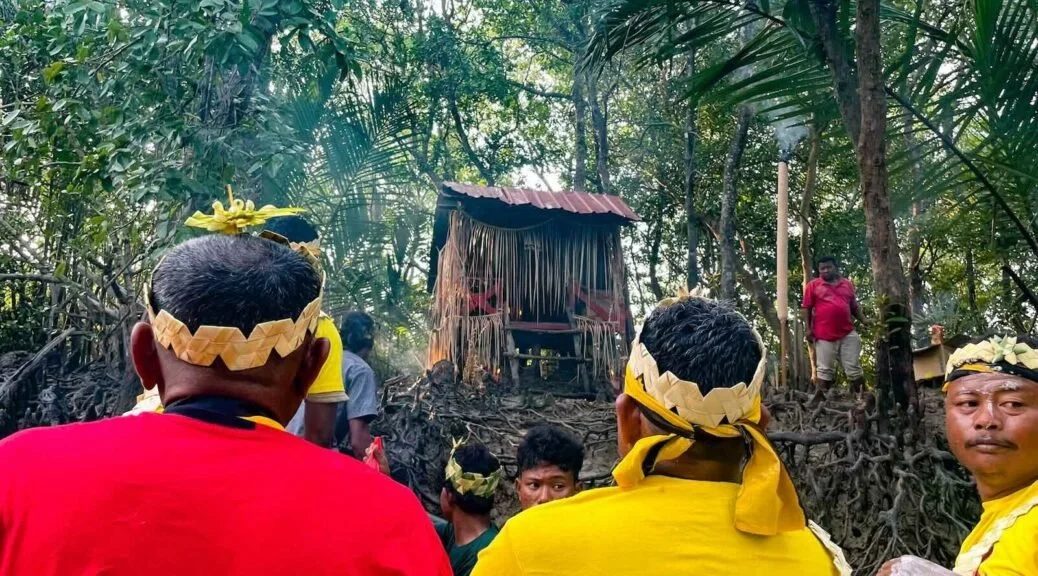
Using mangroves bounty, the Mah Meri community worship ancestral spirits on Hari Moyang in sanggar (shrines), both in the sea, with Westport visible, and within mangrove forests | Image by Samantha Ho
In an article for NYSEAN Partner, Macaranga, Samantha Ho writes about the Indigenous Mah Meri people’s concerns about the proposed Carey Island port in Malaysia.
THE EVE of the Hari Moyang festival (Ancestor’s Day) is traditionally a family affair in Kampung Sungai Kurau, a village on the edge of Selangor’s Carey Island.
As twilight falls on 18 March, adults and children of the Indigenous Mah Meri community gather around hand-built wooden shrines in their gardens. They have spent hours weaving nipah palm leaves and gathering fresh flowers to decorate the shrines, no two of which are the same.
This is an intimate ritual unique to each family — and not one that outsiders are usually invited to attend. Instead, busloads of tourists typically join the public festivities on the following day at the Mah Meri Cultural Village and neighbouring Kampung Sungai Bumbun.
But for the first time, Lanuza Layon, the chair of the Kampung Sungai Kurau’s Indigenous Village Development and Safety Committee (JPKKOA), has invited visitors to witness how he and his family pay respect to their ancestors. It is one of many Indigenous customs at risk from the impending redevelopment of Carey Island into a mega port, led by Malaysia’s federal government.