The Return of the Trump Tariffs: How Will Southeast Asian Firms Respond?
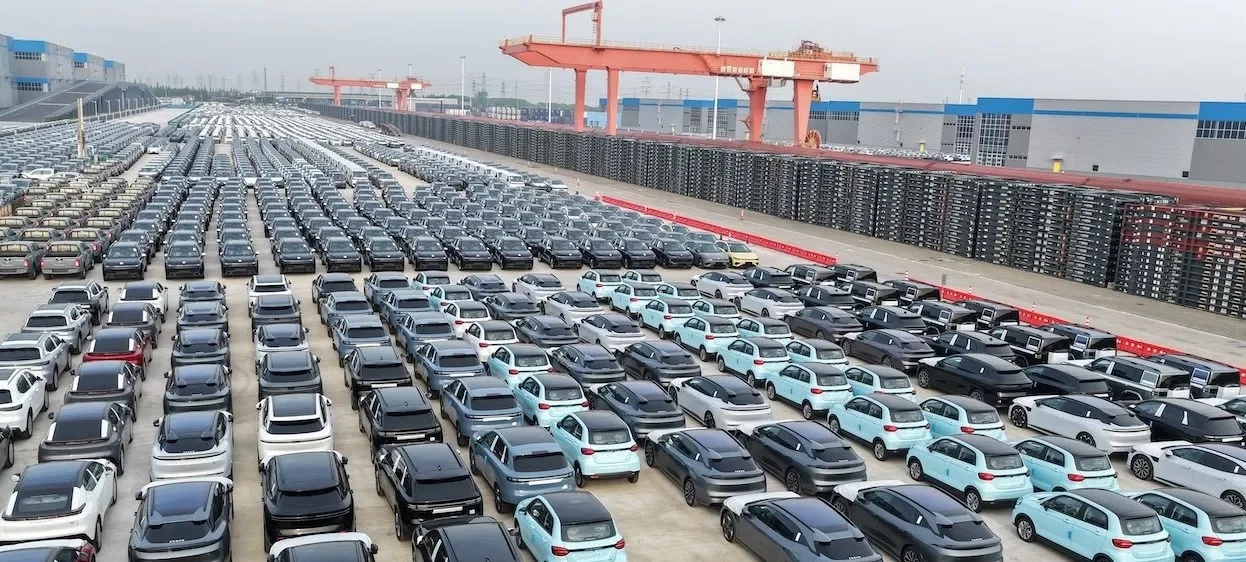
Chinese-made vehicles, including Zeekr cars, wait to be shipped for export at Taicang port in Suzhou, China on April 27, 2026 | Photo by CN-STR / AFP / CHINA OUT
In an article published by Fulcrum, Jayant Menon asserts that the Trump administration’s determination to reintroduce tariffs on Southeast Asia should spur long-turn measures to diversify markets and reduce reliance on the United States.
A rules-based order governing global commerce has given way to disorder, due mainly to an unpredictable but undeniably protectionist US trade policy under President Donald Trump. Even after the Supreme Court of the United States (SCOTUS) struck down Trump’s reciprocal tariffs in January 2026, his administration has been pursuing every means possible to reintroduce tariffs.
A Section 301 investigation into forced labour recently concluded with 10–12.5 per cent tariffs on most Southeast Asian countries, while another on structural excess capacity is currently ongoing (Table 1). Efforts are underway to expand existing sectoral tariffs under Section 232 to include critical minerals, robotics, pharmaceuticals, and aircraft and jet engines. These developments signal that previous tariff rates may return for most ASEAN countries — and they could be broader in coverage and more durable in legal authority, compared to the reciprocal tariffs’ “economic emergency” premise.
In addition, a recent White House report branded most Southeast Asian countries as apparent transhipment points for China. The report claimed that the 30 per cent increase in Southeast Asia’s exports to the US in 2025 was due to Chinese companies using the region as a conduit. If transhipment is confirmed, goods will be subjected to an additional 40 per cent levy or higher. Recent mixed signals compound the uncertainties. While the US debates China on tariff cuts for ‘non-sensitive’ items ahead of the Trump-Xi summit scheduled for September 2026, investigations against multiple trade partners continue and a trade war with Canada rages on.