The Bangsamoro’s Unfinished Peace
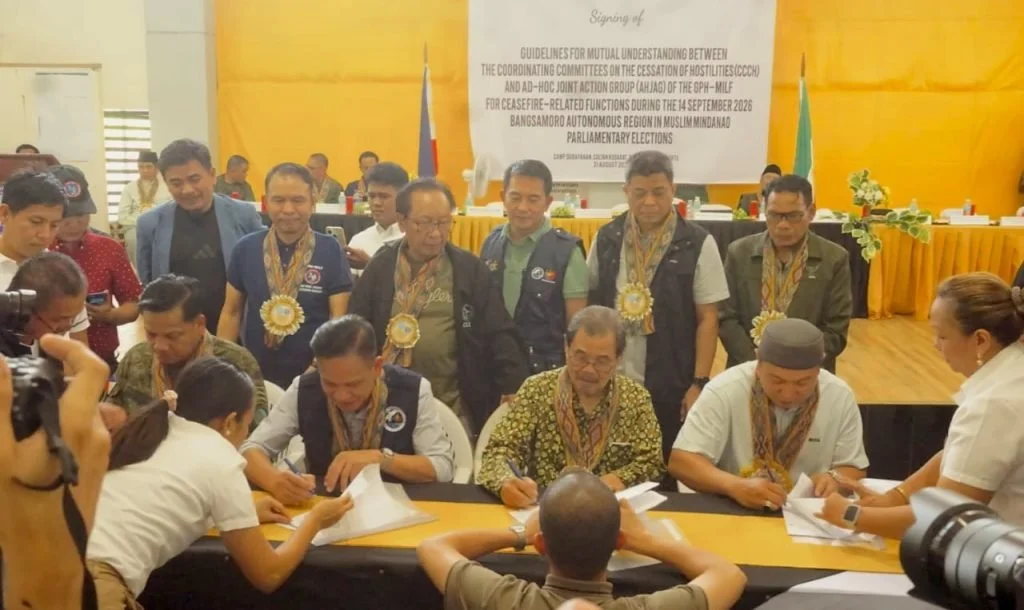
MOA Signing between the National Government and MILF in Camp Darapanan, August 31 2026 | Photo: The Respair Foundation
In an article published by New Mandala, Haroro J. Ingram, Acram Latiph, Yasmira Moner, and Aliah Adam write about the decades-long peace agreement in the Bangsamoro Autonomous Region in Muslim Mindanao (BARMM). They assert that the region remains in a delicate political, economic and security balance. This balance depends on a suite of critical post-election decisions by the newly elected Bangsamoro government and its national and international partners.
The Bangsamoro transition has reached a decisive juncture. Born of the peace agreement between the Philippine government and the Moro Islamic Liberation Front (MILF), the Bangsamoro Autonomous Region in Muslim Mindanao (BARMM) and its transition authority were established in 2019 to turn a negotiated settlement into durable institutions of self-government capable of delivering on peace dividends ahead of inaugural parliamentary elections.
Seven years and four postponed elections later, the BARMM will hold its first elections on 14 September 2026. The Bangsamoro’s first elected government inherits a defining question: has the transition delivered on the peace agreement and built the institutions needed for meaningful self-government?
We argue that the transition period has produced institutions, instruments and conditions characterised by dualities that simultaneously enable and constrain the ability to achieve this goal. Institutions for autonomy are established but have yet to fully deliver peace dividends. The MILF’s political conversion is almost complete, but the process has fractured its leadership and political party.
Meanwhile, the inaugural elections promise democratic consolidation, yet poor electoral readiness threatens the vote’s credibility. This pattern of dualities connects the transition’s achievements and gaps to the risks that are converging around the BARMM’s first elections. How these dynamics shift will depend on decisions made in the 18 months following the election. With senior leaders on either side of a factional divide within the MILF warning of a return to armed struggle, the stakes for the BARMM and the Philippines are incredibly high.