Southeast Asia’s Costly AI Bargain with US Tech Giants
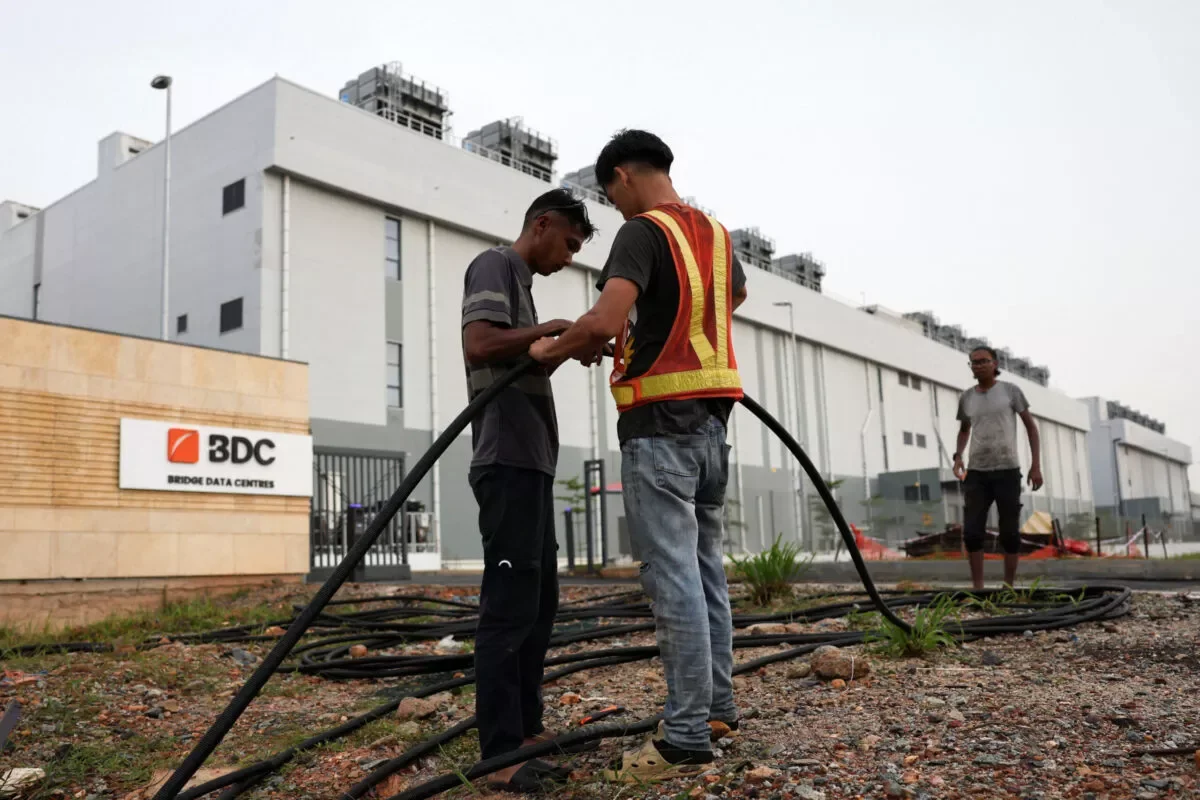
Workers laying cables outside Bridge Data Centers in Johor state, which has become Southeast Asia’s fastest-growing data center hub, at Sedenak, Malaysia, on May 6 | Photo: Reuters
In this paper published by East Asia Forum, Govand Khalid Azeez writes about how Southeast Asia is at risk of being technologically dependent on US technology companies that have invested in artificial intelligence in Southeast Asia. He asserts that a more equitable future in AI requires rethinking ownership, governance, and value distribution.
Technologies are never just tools, they are accompanied by patterns of labour, know-how and social relations. In Southeast Asia, unequal ownership structures and geopolitical factors have always shaped technological sovereignty. Deepening this techno-societal divide is growing investment by US technology companies in artificial intelligence (AI) in the region.
The deals struck by US firms such as OpenAI, Meta and Google with telecommunications and digital service providers from India and Southeast Asia demonstrate this trend. Companies like Singapore’s Singtel, Indonesia’s Telkomsel and India’s Bharti Airtel and Reliance Industries provide US technology companies with two fundamental resources — nearly a billion consumers whose usage and behavioural data train and refine their models, as well as local infrastructure, payment interfaces, identity systems and regulatory cover. This integration drives customer acquisition costs towards zero, embeds their models inside existing data flows and shapes governance frameworks.
While 83 per cent of Southeast Asian firms are still in the early stages of AI adoption, telecommunications companies have been early adopters. These companies sell partnerships as enabling their evolution from connectivity providers into AI distribution platforms. States are promised productivity gains and a futureproofed economy while the public is promised access, empowerment and the democratisation of AI. US hyperscalers promote their data centres and large language models as ways to end global poverty, advance equality of access and facilitate innovation.