National Museum of Asian Art Returns Three Sculptures to the Kingdom of Cambodia
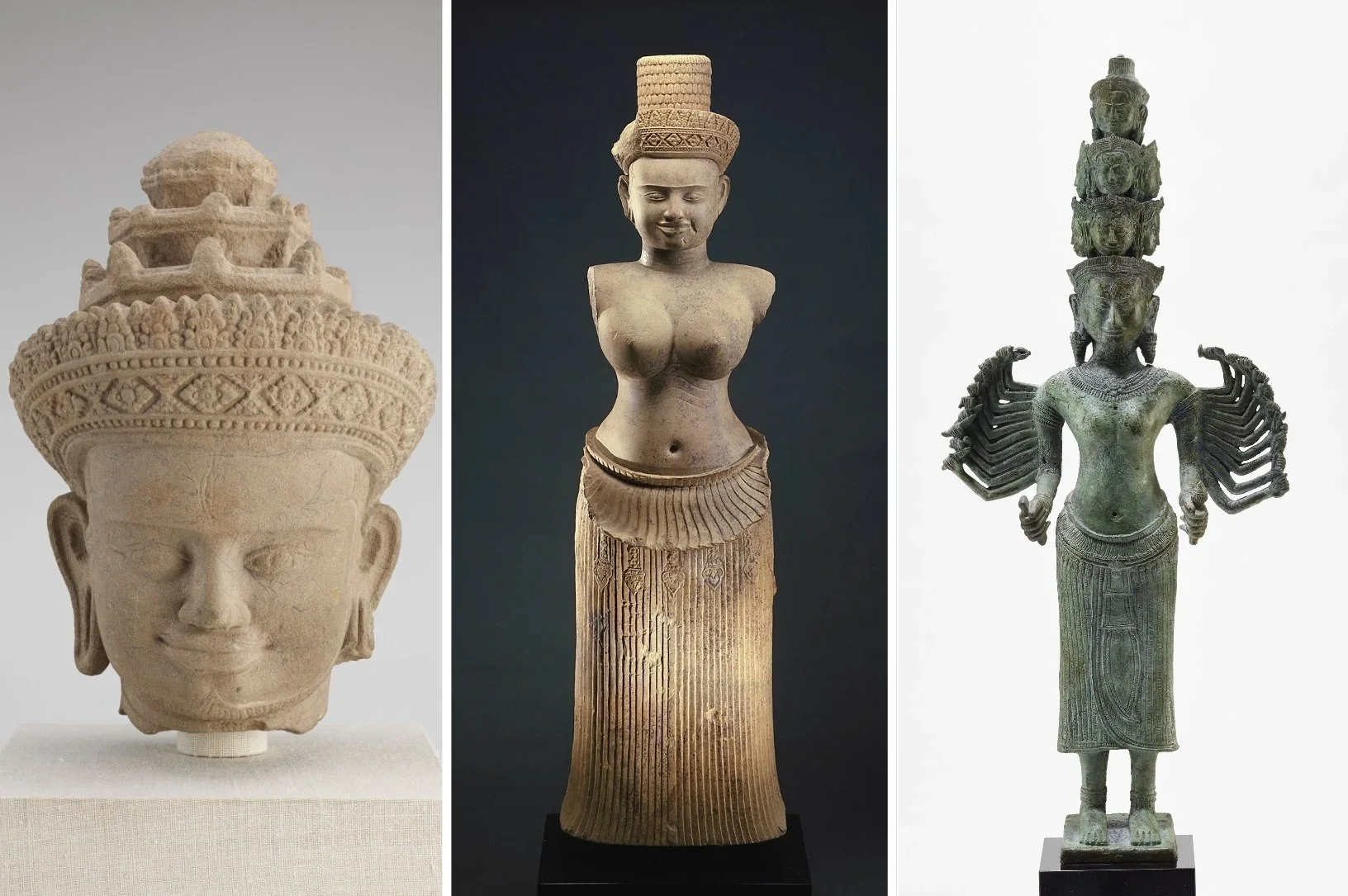
L-R: “Head of Harihara” (mid-10th century), “The Goddess Uma” (10th century) and “Prajnaparamita (Perfection of Wisdom)” (c. 1200); Image Credit: National Museum of Asian Art, Smithsonian Institution | Photo by Robert Harrell
The Smithsonian’s National Museum of Asian Art, a NYSEAN Partner, has announced the repatriation of three sculptures to Cambodia.
The Smithsonian’s National Museum of Asian Art announced [on December 11, 2025] the return of three Cambodian sculptures to the Kingdom of Cambodia. The ethical return, which was initiated by the museum, follows an extensive internal assessment conducted since August 2022. The assessment consisted of several years of dedicated research carried out by the museum’s provenance researchers and curators and efforts undertaken in close collaboration with the Ministry of Culture and Fine Arts of the Kingdom of Cambodia, which determined that the objects were removed from Cambodia during a period of widespread looting amid civil conflict (1967–1975) before entering the U.S. art market. This repatriation is the museum’s first under the Smithsonian’s Shared Stewardship and Ethical Returns policy, adopted in April 2022.
The three sculptures—“Head of Harihara” (mid-10th century), “The Goddess Uma” (10th century) and “Prajnaparamita (Perfection of Wisdom)” (c. 1200)—were donated to the museum and entered the collection without documentation of export from Cambodia. Each object is associated with art dealers suspected of trafficking looted antiquities from Southeast Asia. Based on their close association with specific extant temples and the date of appearance of these objects on the international art market, the museum identified ethical concerns significant enough to warrant a voluntary return.
The Smithsonian’s Shared Stewardship and Ethical Returns policy—created to guide voluntary, good-faith returns based on ethical considerations—enabled the museum to undertake this repatriation through a framework that is unique among U.S. museums. Under this policy, the museum was able to proceed with a voluntary return without requiring a formal restitution claim from Cambodia. The museum has completed the deaccession process for the sculptures and will continue to collaborate with Cambodian partners through ongoing joint provenance research to deepen understanding of their histories.