Indonesia’s Green Industrialization Plans Have a Brown Problem
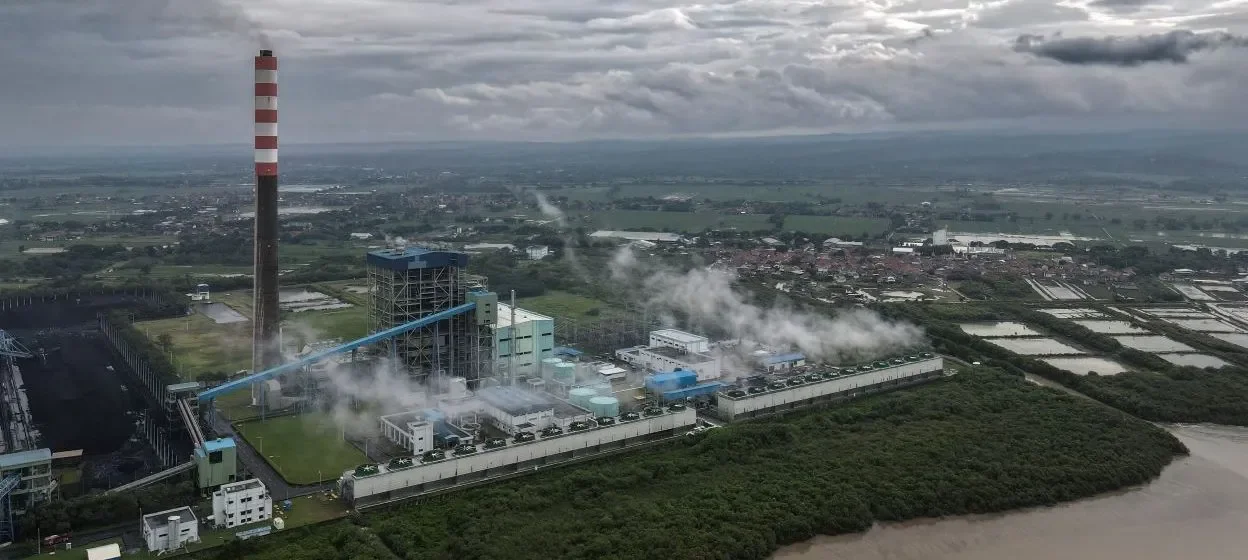
The Cirebon-1 coal power plant in Cirebon, West Java, on January 28, 2026 | Photo by BAY ISMOYO / AFP
In this article published by Fulcrum, Peh Ko Hsu and Siwage Dharma Negara assert that although Indonesia has managed to surpass their renewable energy targets, their green sources of energy continue to exist with their “brown” parts, oil and gas.
Despite emission targets, climate commitments and a strong increase in renewable generation, Indonesia is still seeing rising carbon emissions. This is due largely to new “green” industries co‑existing with a surge in off‑grid coal use. Coal-fired plants are being built to power the nickel processing activities to make “green” batteries. This comes at a time when the quantum of renewable energy generation has grown and surpassed government targets. This, however, has become a double-edged sword: the rise in green electricity is coupled to brown industrial energy, which remains at high levels. Indonesia needs a mid‑course correction to plan and regulate industrial investment. It also needs finance to co-locate with and draw on clean energy rather than captive coal.
Renewable energy sources constituted 17.9 per cent of the country’s power generation in April 2026, surpassing the government’s full-year target of 16.4 per cent. This represents a marked improvement from 14.7 per cent in 2024 and 15.8 per cent in 2025. However, Indonesia’s power generation remains highly dependent on coal. The share of coal in the country’s energy mix has been growing between 2014 and 2020, eventually stagnating at around 61 per cent in recent years. Renewable energy sources have mainly displaced oil and gas (Figure 1).