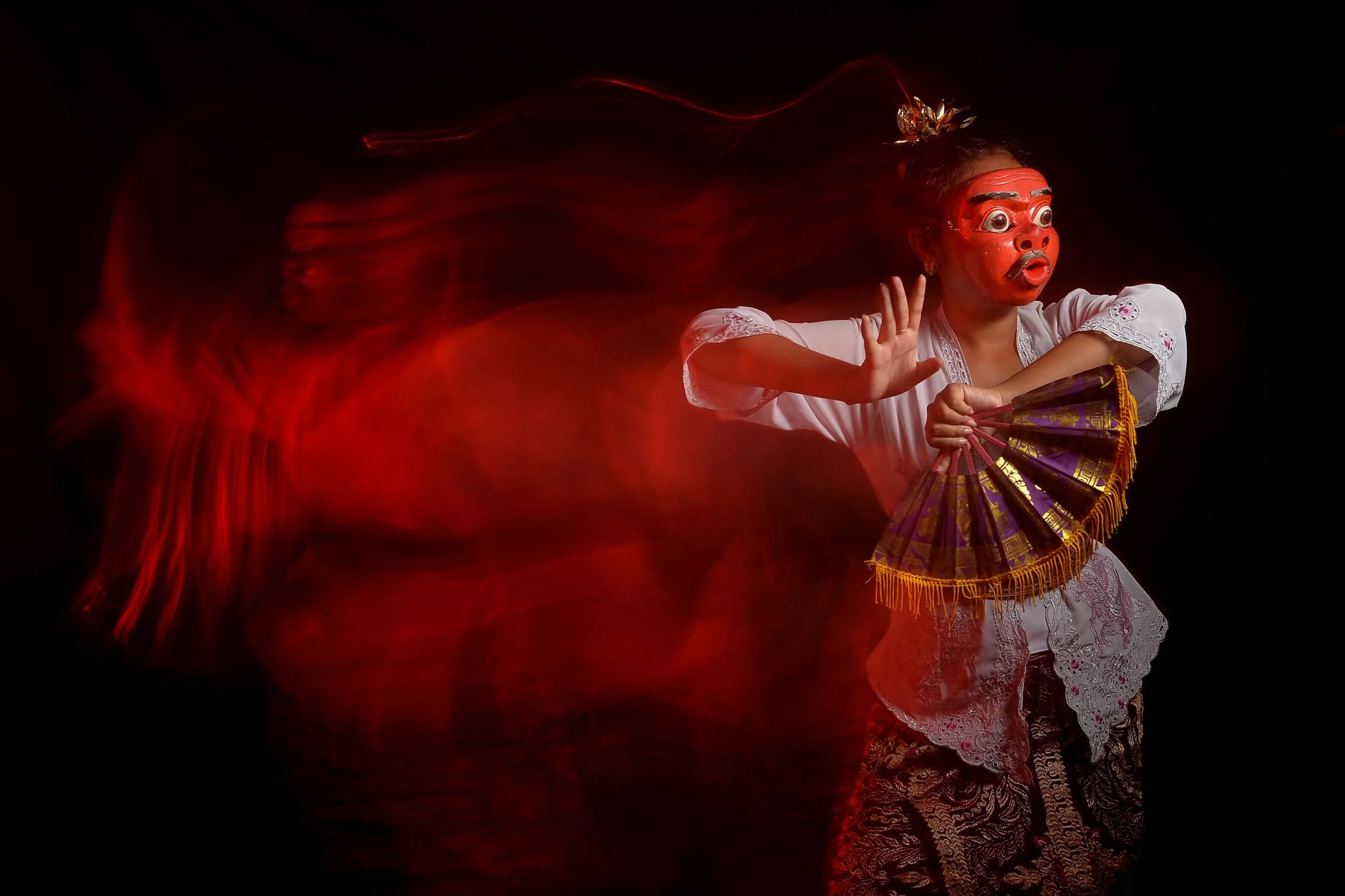
Captivating image of a traditional Balinese dancer with vivid red motion blur effect | Photo by Chandra Diantara
In this article for a special edition of Inside Indonesia, Tito Ambyo and Jamie Edwards discuss the significance of ghosts and haunting in Indonesian culture.
Ask most people what comes to mind when they think of Indonesian ghosts, and the answer tends to be fairly predictable: kuntilanak, pocong, tuyul. The white-dressed female spirit, the hopping shrouded corpse, the bald child who steals coins. These are the ghosts of horror films and late-night storytelling sessions, and they are popular for a reason: they are vivid, frightening, and deeply embedded in Indonesian popular culture.
But ghosts, in Indonesia as elsewhere, are rarely just about fear.
This special edition of Inside Indonesia takes the ghostly seriously. But not to debate whether ghosts are real or not. Through editing these articles and the conversations they provoked, we have realised that this may be the wrong question to ask. As the contributors to this edition show, ghosts do things. They hold memories beyond official reports. They protect forests from careless developers. They walk through the dreams of researchers who come into contact with forbidden manuscripts. They march, headless, through landscapes soaked in political violence. They open space for the ineffable — for everything that modernity insists we set aside.
The articles gathered here reflect a range of voices from scholars, journalists, ethnographers, and community researchers who are writing from across Indonesia and beyond. They offer a richly textured map of what ghosts do.