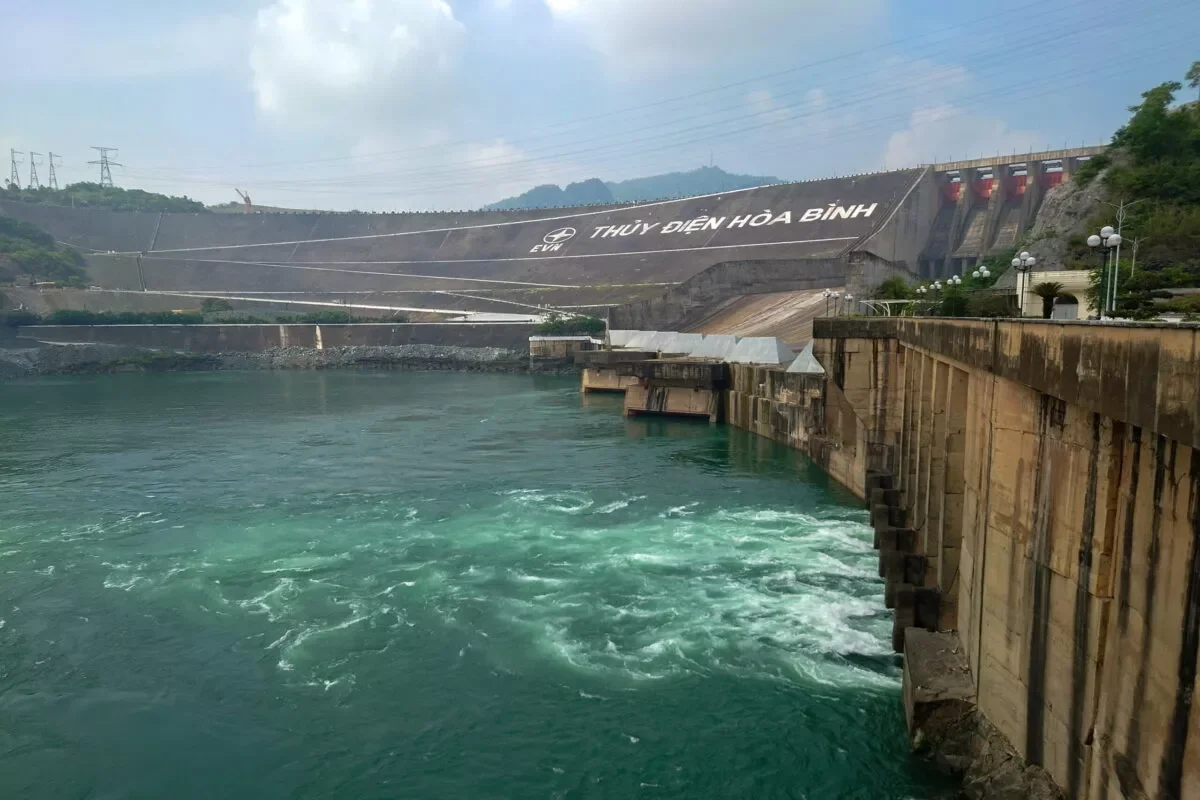
The tailrace and discharge area of the Hòa Bình Dam on the Da River in Vietnam | Photo: East Asia Forum
In an article for East Asia Forum, Zhang Wending and Duan Haosheng assert that Southeast Asia can increase the power of its energy security by deepening regional connectivity and diversifying its power mix.
The 2026 Strait of Hormuz closure forced Southeast Asia to confront its energy vulnerabilities. Before the crisis, roughly 60 per cent of the region’s crude oil imports came from the Middle East, highlighting the risks of reliance on external energy sources. As data centre-driven electricity demand grows, addressing these challenges will require stronger regional power links and a more diversified local energy mix.
ASEAN has begun to respond to both pressures. Leaders highlighted the impact of Middle East instability on energy markets and maritime routes at the May 2026 48th ASEAN Summit, while the ASEAN Power Grid is being advanced to strengthen regional power trade and energy security. Mainland Southeast Asia already hosts some of ASEAN’s more developed cross-border power links, including the Laos–Thailand–Malaysia–Singapore Power Integration Project, which has facilitated up to 200 megawatts (MW) of cross-border electricity trade through existing interconnections.
The Mekong subregion — often referred to as the ‘battery of Southeast Asia’ — is a critical testing ground for deeper regional energy integration. The Mekong already has substantial hydropower capacity, but questions around capacity management and integration with non-hydro renewables remain.
While major dams are hydrologically linked, coordination of dam operations across the basin remains incomplete. Cross-border connectivity is constrained by uneven grid development, differing technical standards and fragmented regulations across national jurisdictions, as well as limited storage and unstable dry-season supply.