After the Unrest: How Indonesia’s President Prabowo Regained Trust and Why It Might Not Last
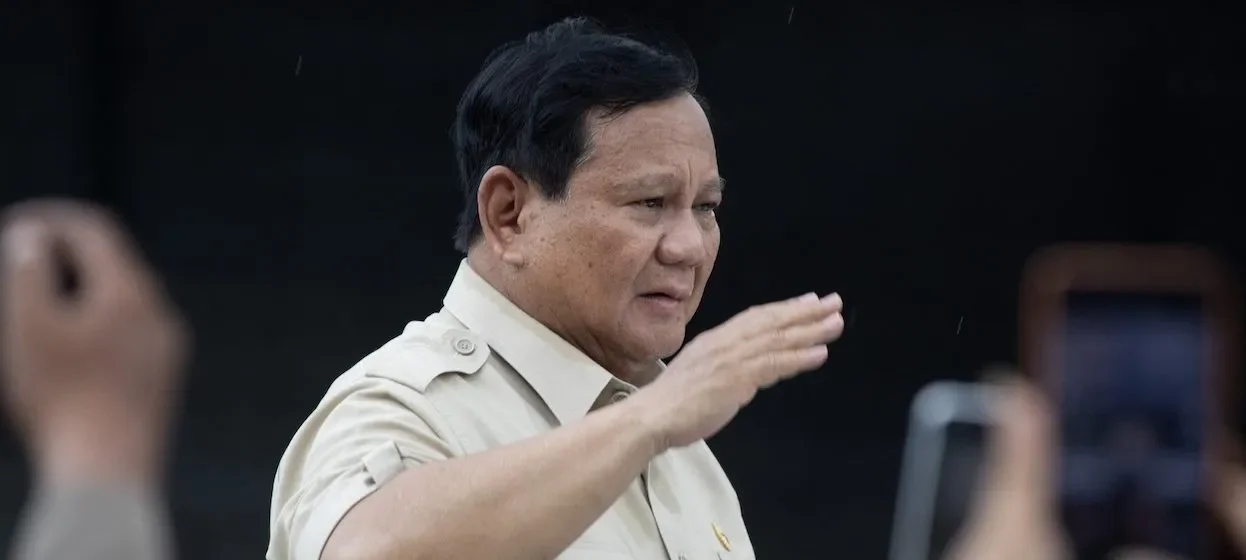
Indonesian President Prabowo Subianto greets his supporters after the inauguration of the new Commuter Line train station in Jakarta on 4 November 2025 | Photo by Donal Husni / NurPhoto / NurPhoto via AFP
In an article for Fulcrum, Burhanuddin Muhtadi discusses challenges faced by Prabowo’s administration, despite recovering public approval, as the administration must tackle public demands for deeper structural reforms.
When Prabowo Subianto assumed Indonesia’s presidency in October 2024, public expectations were exceptionally high. Once a controversial figure in the country’s political landscape, he entered power with a promise of “continuity with change” to maintain stability while delivering bold economic reforms. His first year in power, however, coincided with shifting global conditions: a recovering post-pandemic economy, rising food and energy prices, and heightened geopolitical uncertainty in Southeast Asia.
Domestically, the Prabowo administration inherited a mix of optimism and scepticism. Many Indonesians viewed him as a strong leader capable of ensuring order and decisive governance. Yet others questioned whether his leadership style would deepen the centralisation of power or sideline democratic institutions. After his first year in office, the central question occupying political elites and the public has become: how strong is Prabowo’s public support, what drives it, and where are its limits?
The most recent Indikator Politik survey registered an approval rating of 77.7 per cent for President Prabowo, marking a significant recovery from the public discontent that followed the widespread social unrest in late August. Many analysts had predicted a sustained decline in his performance ratings due to the demonstrations’ intensity. Yet the late October data reveal a dramatic reversal. Rather than eroding public trust, the turbulence appears to have been followed by a consolidation of opinion in favour of the president, driven by a combination of perceived political stabilisation and the government’s targeted social assistance policies.