
Organizer: Harvard University Asia Center
Type/Location: Virtual
Description:
This talk examines how Vietnamese scientists and medical doctors built the evidentiary case against Agent Orange and its contaminant TCDD dioxin during the 1990s and early 2000s. It traces two dynamics that shaped the relationship between knowledge production and justice in postwar reconciliation efforts between the United States and Vietnam. First, knowledge about TCDD dioxin was produced through a process that was both collaborative and adversarial, and shaped by the American government’s rejection of legal and political responsibility. While necessity may have spurred invention, the resulting science wove together herbicide data, laboratory analysis of blood samples, and epidemiological fieldwork into a transnational evidentiary framework that was harder to dismiss than one controlled by a single country. Second, the Vietnamese government’s classification of dioxin data as a national security secret, even after it had been published, revealed that the primary obstacle to environmental justice was not scientific ignorance but the state control of knowledge. The same Vietnamese state that authorized Committee 10-80 to study TCDD dioxin also confiscated research materials from international researchers. These actions reveal a coherent strategy of managed engagement in which the state sought knowledge about TCDD dioxin without ceding control over its political implications. Understanding this dynamic is essential for rethinking how postwar reconciliation actually worked.
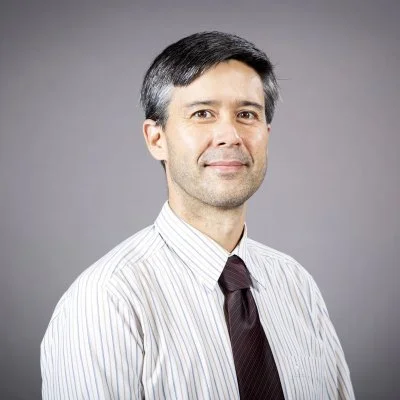
About the Speaker:
Michitake Aso is an Associate Professor of History at the University at Albany, SUNY. He researches the environmental, medical, and scientific histories of Vietnam, and is the author of Rubber and the Making of Vietnam: An Ecological History, 1897–1975 (University of North Carolina Press, 2018), which won the Agricultural History Society’s Henry A. Wallace Award and the Forest History Society’s Charles A. Weyerhaeuser Award.
Registration:
To attend the event virtually, please register here.