When “Getting Close to Nature” is a Business
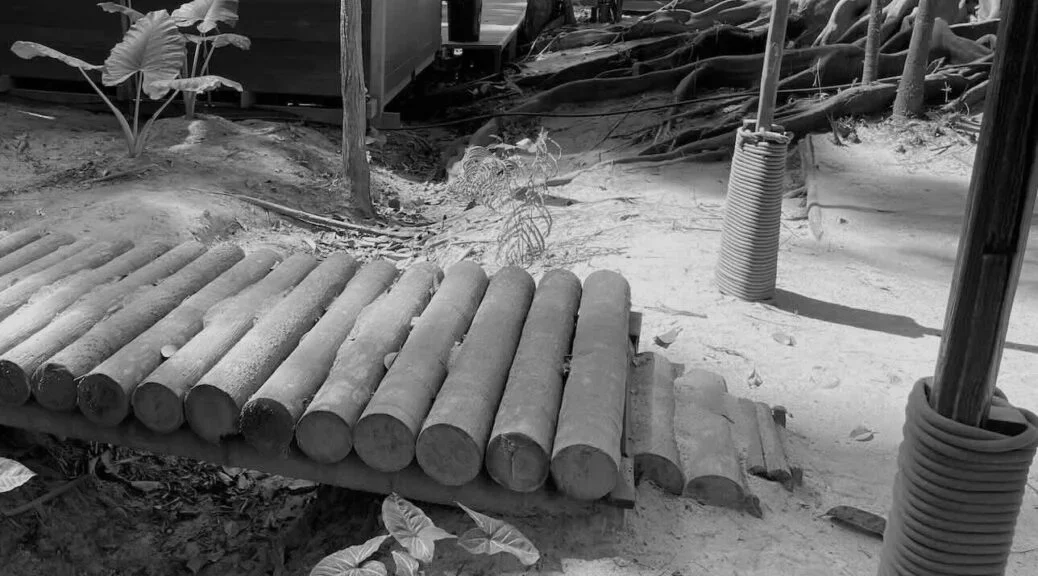
What does comfort in tents mean for our relationship with nature? | Image by Sharon Chin
In an article by Macaranga, Brian Khow writes about the capitalist phenomenon of “glamping” or glamorous camping in Malaysia.
I was shocked by the recent development in a forest reserve located along the border of Port Dickson, Negeri Sembilan, and Melaka. A private recreation facility has in the last few months emerged next to a beach in that forest.
Made up of luxury tents, campsites, and a café, this glamping operation now occupies a section of the beach, with fenced boundaries and facilities reserved for paying patrons.
At first, I did not really understand what glamping meant. After looking it up, I learned that it is formed from ‘glamour’ and ‘camping’. It turns camping—an activity that once meant uncertainty, simplicity, wildness, and risk—into an experience that is comfortable, controlled, and easy to consume.
As someone interested in sociology, I began to think about the deeper meaning behind all this, and how the idea of recreation has changed over time.
Throughout history, humans and nature have been closely connected and have shaped each other. However, under the fast pace and heavy pressure of modern life, ‘returning to nature’ has come to be imagined as a form of escape through recreation.
People go to forests and beaches to ‘recharge’, and this now feels natural and normal. Yet this way of relating to nature is not something that has always existed.