Traditional Fisher-Guardians Test Meaning of Conservation
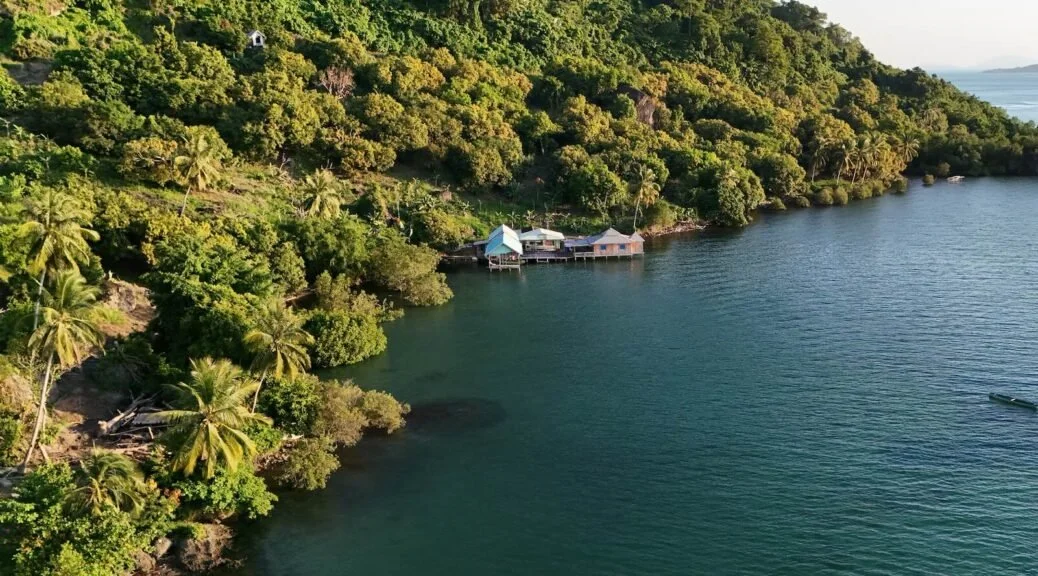
One last house remains standing on the coast after hundreds of Bajau islanders were evicted from Pulau Bodgaya in 2024; mango orchards were also partly cleared [left]. | Image by Patrick Mosinoh Jr
In an article for NYSEAN Partner, Macaranga, Rebecca Chong writes about how Bajau residents of two islands in Malaysia’s Tun Sakaran Marine Park are battling eviction due to the lack of land titles, forefronting the tension between conservation and indigenous communities.
BEFORE dawn breaks over Pulau Sebangkat, Sabah, 36-year-old fisherman Mohd Gadafi Ahmad puts on a security vest, climbs into a boat and heads out to sea. His destination is not a fishing ground.
Instead, he patrols the waters around his island home in the Tun Sakaran Marine Park (TSMP), watching for fish bombers and other activities that could damage the coral reefs he has spent years helping to protect.
“We don’t need any more awareness campaigns. We understand the importance of our marine treasures, and we put effort into protecting them,” he said.
“If it weren’t for us, I believe the corals in the area would have been gone long ago.”
The TSMP is Semporna’s largest state park, covering 350 sqkm of seas hosting the region’s richest marine biodiversity, and 8 islands, 6 of which are inhabited. It was gazetted in 2004 under The Parks Enactment 1984 and is managed by Sabah Parks.
The TSMP protects marine resources, serves research, attracts divers and tourists from around the world, and supports local livelihoods. By voluntarily patrolling the area and reporting suspicious activities, Gadafi and fellow traditional guardians help to safeguard the park’s functions.
Yet fishers and their families on 2 of these islands – Pulau Bodgaya and Pulau Sebangkat – now find themselves facing a challenge: proving they still have a place within the protected area they say they help safeguard.