The Philippines Leans into Alliances to Modernize its Defense
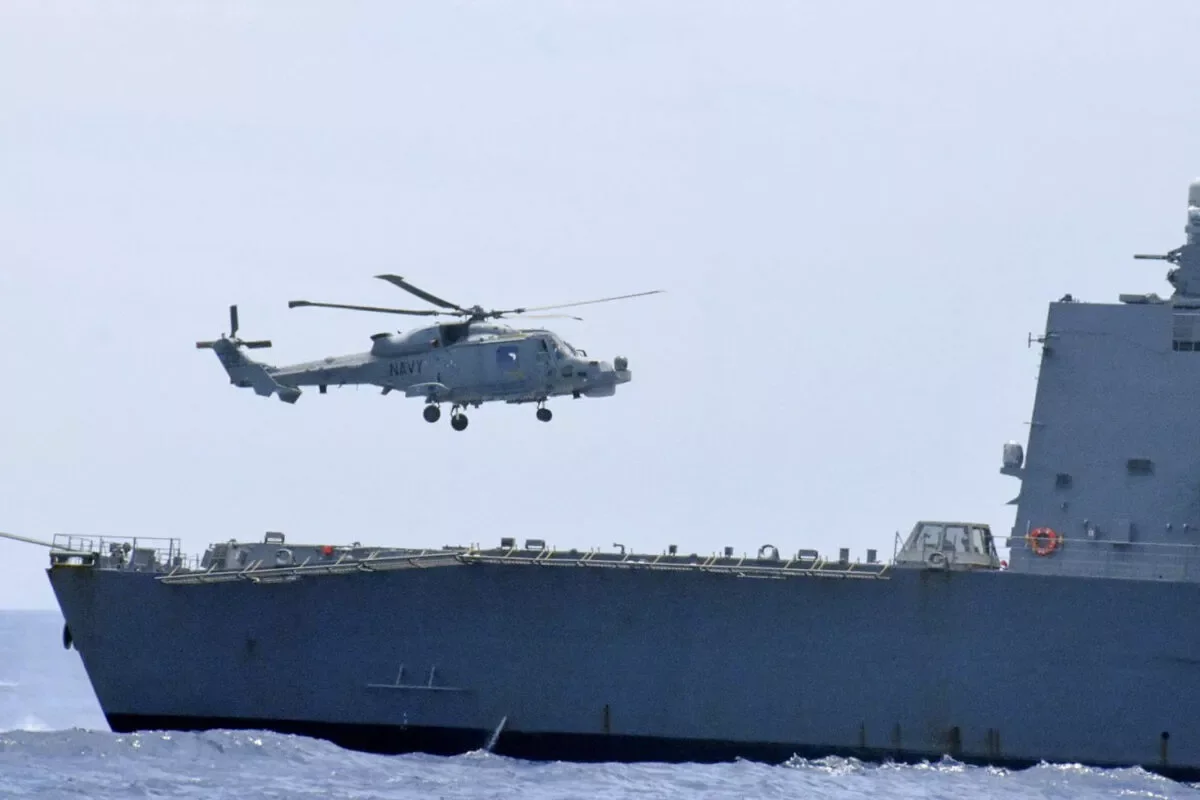
An AgustaWestland AW159 Wildcat maritime military helicopter operated by the Philippine Navy
In an article published by East Asian Forum, Abdul Rahman Yaacob examines not only the ambitions behind the Philippines’ military mondernization efforts, but also the challenges posed by costs, human resource, systems and structure, and the evolving character of warfare drawing from the war in the Middle East.
For much of the post-Cold War era, the Philippine military has struggled to reconcile its strategic responsibilities with limited capabilities, relying on ageing platforms and a force structure geared towards internal security. Yet as strategic competition intensifies across the region, military modernisation has become an urgent national priority.
Geographically, the Philippines’ more than 7600 islands sit astride vital sea lanes linking the Pacific Ocean and the South China Sea. Its Exclusive Economic Zone spans more than 2 million square kilometres.
The Luzon Strait and Bashi Channel are strategically critical waterways that would almost certainly be included in any conflict or regional contingency over Taiwan. Regional defence observers have privately suggested that northern Luzon could become a target for adversaries’ military operations aimed at controlling access to these waterways.
Yet for decades, Manila lacked the capabilities to deter or respond effectively to external threats. Nowhere is this more evident than in the South China Sea, where China’s Coast Guard and maritime militia vessels have persistently challenged Philippine sovereignty by harassing fishermen, disrupting resupply missions and obstructing energy exploration. Beijing continues to strengthen its military presence across the South China Sea, including by building new infrastructure on disputed features such as the Antelope Reef.