Thailand’s Split-Ticket Election Exposes Party Weakness
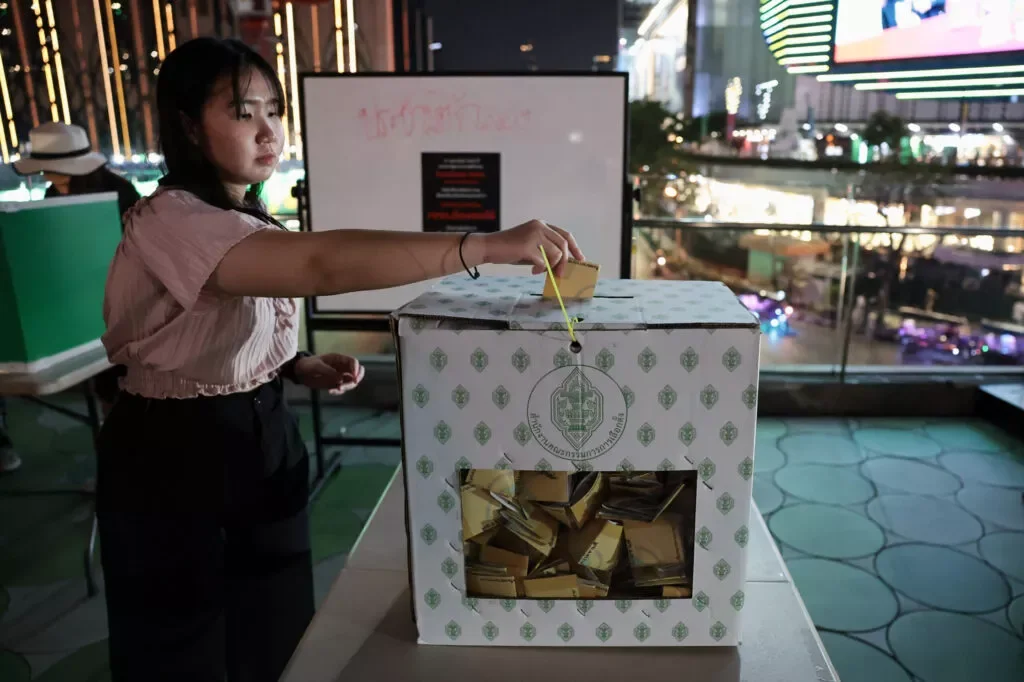
Photo: East Asia Forum
In an article for East Asia Forum, Aim Sinpeng asserts that the results of Thailand’s February 2026 election reveal the enduring power of personal networks, incumbency and political families in shaping voter behavior within Thailand’s mixed electoral system.
Thailand’s election on 8 February 2026 delivered a result that looked like a political paradox. The conservative Bhumjaithai Party surged in single-member districts and emerged as the largest bloc in parliament, while the reformist People’s Party remained the country’s most competitive at the party level. Split-ticket voting is not new in Thailand, but this election strikingly separated two parties that are nothing alike in political orientation.
Political scientists often point to strategic voting to explain outcomes like these. Strategic voters are those who back their preferred parties on the party-list ballot, but then strategically choose candidates they deem most viable in the constituency race. Mixed electoral systems like Thailand’s can be conditioned for split-ticket voting because they pose two distinct questions: who should represent a voter’s area and which party should assume national power.
It is tempting to interpret the election result as electoral calculation, with Thai voters carefully optimising across two political tiers. But that story risks treating all split-ticket voting as strategic voting.