Thailand’s Defense Budget: Money and Materiel
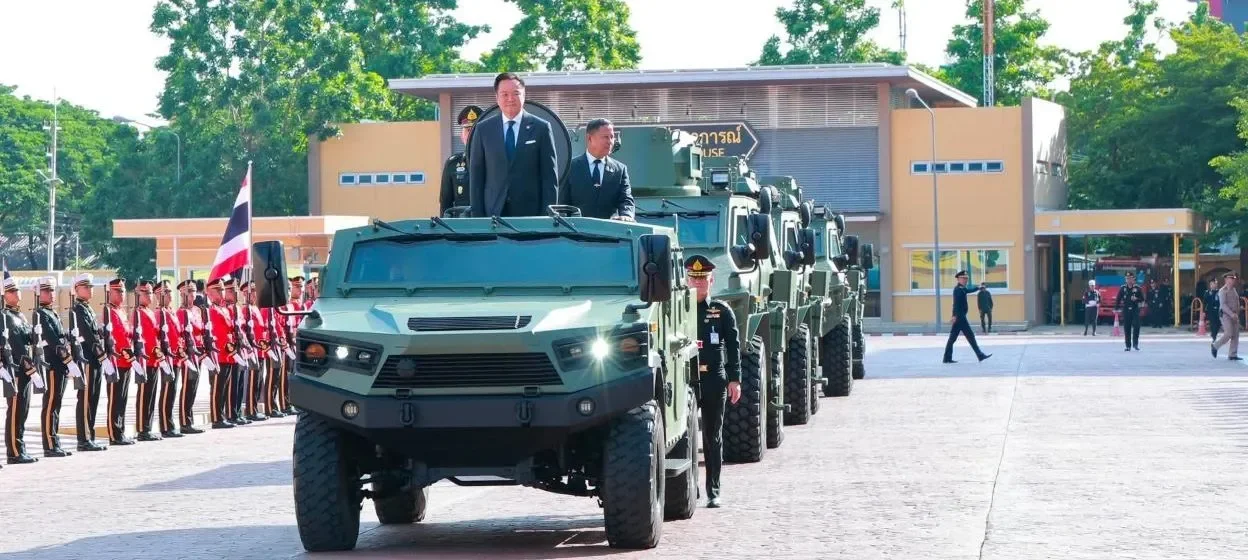
Thai Prime Minister and Minister of State for Defense, Anutin Charnvirakul, at the opening of the Thailand Defence Industry Exhibition 2026 (THAIDEF-EX 2026) on July 8, 2026 | Photo from Thai Ministry of Defence Spokesperson's Office / Facebook
In this article published by Fulcrum, Paul Chambers writes about Thailand’s defense budget. He asserts that the unchanged budget exemplifies the Thai government’s growing inclination to cater to its military.
In 2026, Thailand’s defence budget and procurement purchases increased. This owed much to the Bhumjaithai-led government’s greater willingness to accommodate the military’s preferences on defence spending and procurement. Beyond strategic considerations prompted by border conflict and a shifting regional security environment, however, this shift reflected the political imperative of retaining the armed forces’ support. This support has long proved indispensable to any government’s hold on power, whatever its electoral mandate.
Prior to the border clash with Cambodia in 2025, Thailand’s defence budget had been in recession. The budget declined in 2023, when the civilian-led Pheu Thai (PT) administration replaced the pro-military Palang Pracharat government. In 2024, the budget increased slightly as PT sought to accommodate a military it had long antagonised. The July 2025 Thai-Cambodian border clashes provided a major security rationale for another surge in military spending. Indeed, when Anutin Charnvirakul became Prime Minister in September 2025, his government approved more money for the armed forces. The move was popular and was driven by a wave of anti-Cambodian Thai nationalism and the increasingly close ties between the conservative Bhumjaithai Party (BJT) and the military.
Following Anutin’s February 2026 election victory, the already heightened defence spending persisted