Testing Denial: The Philippine Alliance in America’s First Island Chain Strategy
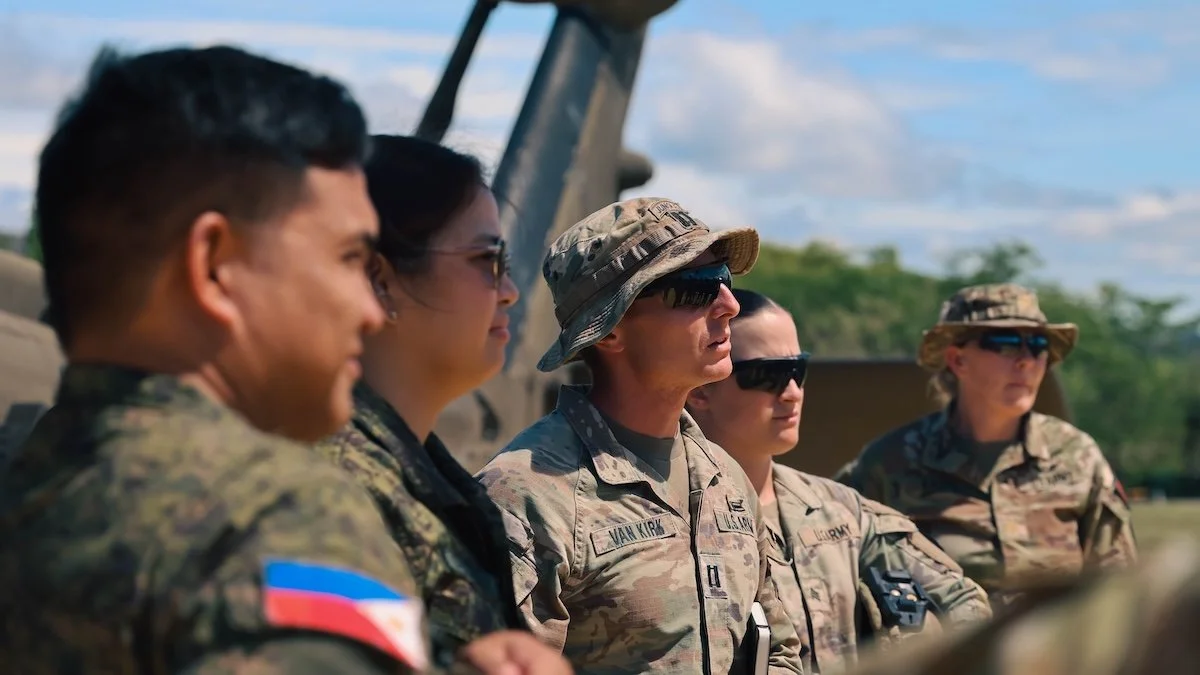
Philippine Army soldiers partnered with U.S. Army medics for a medical evacuation-focused Subject Matter Expert Exchange (SMEE) as part of Exercise Salaknib on March 25, 2025 | Photo Credit: Spc. Taylor Gray
In an article for War on the Rocks, Patrick M. Cronin and Nathaniel Uy assert that the credibility of U.S. Indo-Pacific strategy depends on whether allies such as the Philippines can sustain resilient, repairable military infrastructure under attack.
An alliance is only as credible as the runway it can repair under fire.
The Pentagon’s latest National Defense Strategy clarifies American aims in the Indo-Pacific while exposing what those aims demand of frontline allies such as the Philippines. The strategy’s emphasis on a “strong denial defense” shifts the metric of credibility. Though the strategy does not specify the objectives to be denied, its logic implies preventing a rapid Taiwan fait accompli and constraining the People’s Liberation Army’s ability to establish sustained sea and air control inside the chain. Whatever the precise intent, the question is no longer how many forces are forward deployed to signal resolve, but whether the United States and its allies can prevent an adversary from seizing control of critical maritime corridors at the outset of a crisis. When the unclassified strategy declares that allies “must shoulder their fair share,” it signals that tangible hard power, and not rhetorical alignment, now defines the value of what it means to be an American ally.
If the United States is serious about denial strategy along the First Island Chain, credibility will be tested less in Taiwan than in the Philippines — specifically in whether Manila can politically sustain resilient, repairable, and survivable infrastructure under pressure.
That test hinges on investing in resilience over symbolism. Hardened facilities, dispersed logistics, and rapid repair matter more than episodic presence. And those capabilities must be politically sustainable in Manila if deterrence by denial is to endure.