Rohingya Children Bear Rising Mental Health Burden as Families Struggle to Cope
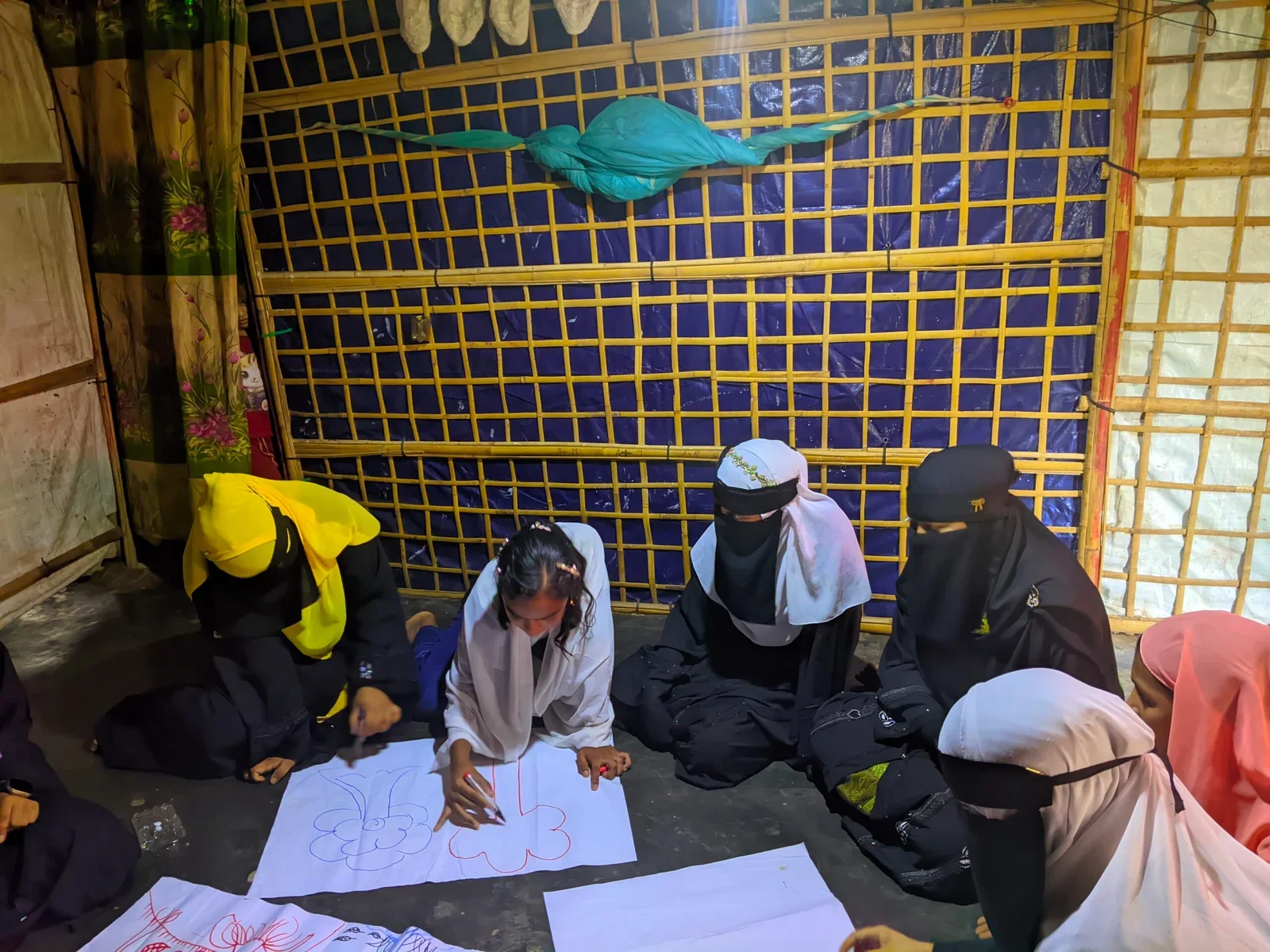
Noor Shehera, second from left, draws during a mental-health support activity at Handicap International's Rohingya refugee camps in Cox's Bazar, Bangladesh on September 10, 2026 | Saidul Islam/Mekong Independent/Creative Commons
In an article for Mekong Independent, Niyamot Ullah asserts that Rohingya children in Bangladesh’s refugee camps are confronting a depending mental health crisis as poverty, family problems, and uncertainty over their future take a toll on them.
From where Noor Shehera sits in her small home in Camp 6 of Bangladesh’s Cox’s Bazar, the rising voices of her mother and father easily reach her.
For the last few years, her family has had significant financial stress, the 13-year-old said. They can’t afford to give her new clothes or school supplies. Sometimes, there’s not enough food.
Lately, even the cost of her monthly tuition at an informal school in the camp could spark arguments between her parents.
“I could sit with my books for hours, but I could not concentrate on what I was reading,” Noor Shehera said. “All I could think about were the problems at home.”
Poverty, family problems, overcrowding, and education have become increasingly important factors influencing the mental health of Rohingya youth.
Over 29% of individuals seeking mental health services at just one of their facilities in 2025 were children under 15 years old, Médecins Sans Frontières, or MSF, said in a report published in August.
This is compared to nearly 10% in 2021.