Myanmar’s Election is a Litmus Test for ASEAN Centrality
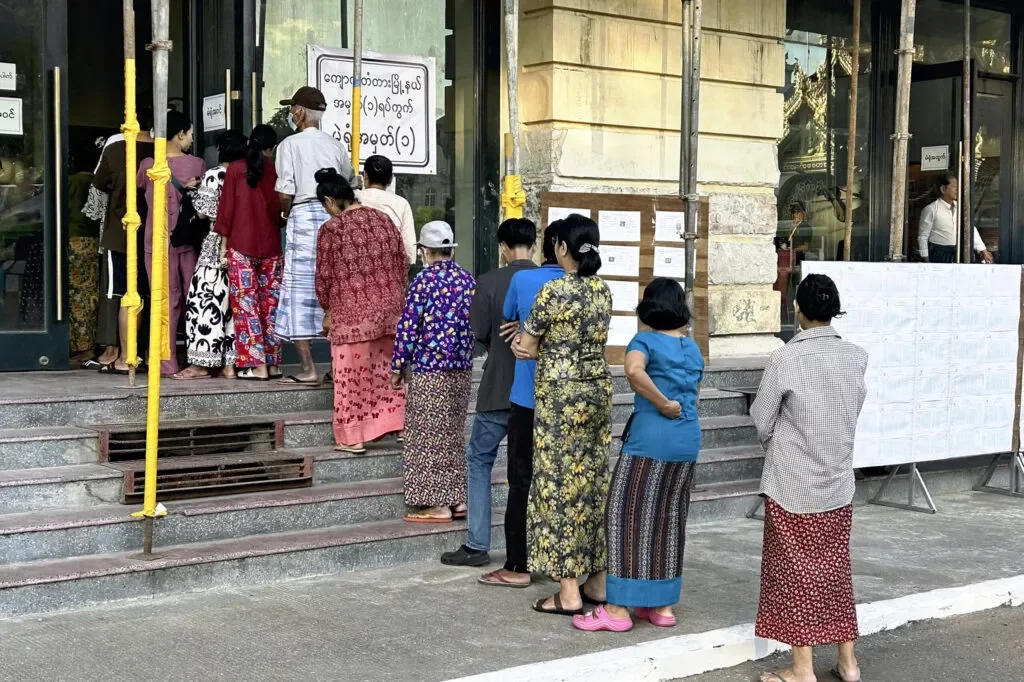
In Myanmar, the Burmese junta held the first phase of a contested election | Image: AP
In an article for East Asia Forum, Myat Sandar Zaw asserts that ASEAN must choose between pursuing necessary institutional adjustments and adopt a more proactive policy orientation versus accepting continued erosion of its centrality across regional security challenges.
ASEAN’s responses to major regional security challenges like the Myanmar crisis illustrate weakening ASEAN centrality — ASEAN’s key principle and aspiration. The question of whether and how ASEAN can assert its centrality in the future hinges on its approach to Myanmar’s junta-organised elections, held in December 2025 and January 2026.
Article 41.3 of the ASEAN Charter states that ASEAN should uphold its centrality in regional cooperation and community building. The article centres on substantive centrality, meaning ASEAN’s ability to uphold its primacy regarding the outcomes of key regional security challenges.
In the eyes of both domestic and international communities, Myanmar’s junta-administered elections are a sham. The run-up to the elections has been characterised by the imprisonment of key political figures, such as Aung San Suu Kyi and former president Win Myint, and the exclusion of main opposition parties including the National League for Democracy, the former ruling party led by Aung San Suu Kyi.
The junta has also marginalised voters in conflict-affected areas — mainly in central Myanmar and states inhabited by ethnic minorities — and manufactured electoral consent through coerced voting mandates. They overtly back the military’s proxy party, the Union Solidarity and Development Party, through systematic manipulation of the electoral process. In the first phase of the three-phase election, the Union Solidarity and Development Party predictably secured a landslide victory over the controlled opposition parties.