Moral Economy and the Dutertes’ Political Durability
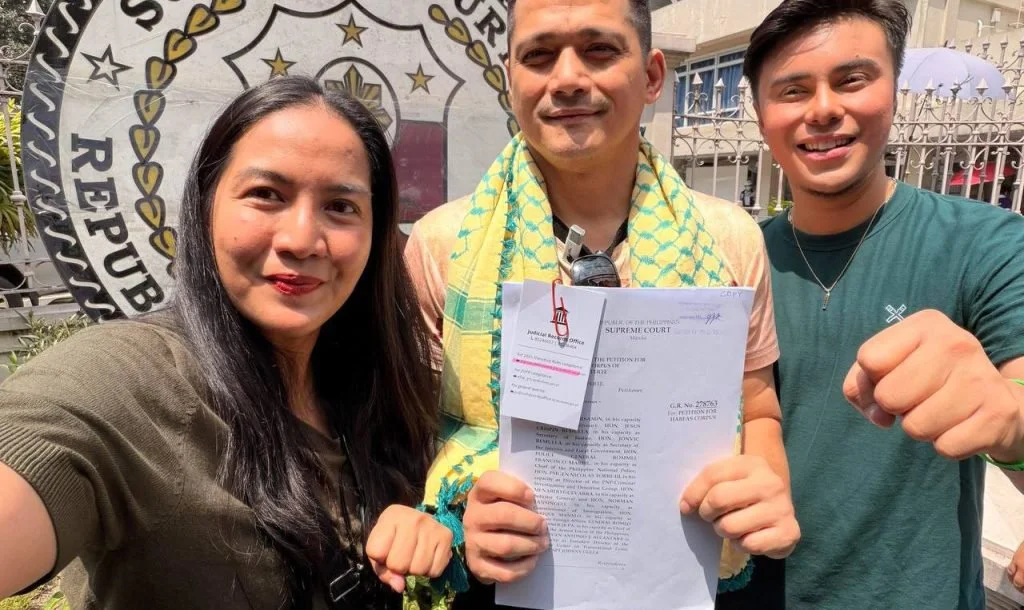
Senator Robinhood Padilla (center) submits petition to Supreme Court Calling for the Release of Rodrigo Duterte, March 2026 | Photo: Robin Padilla on Facebook
In this article published by New Mandala, John Lee Candelaria asserts that a focus on how the cultural concept of “utang na loob” is integral to Duterte maintaining his populist connection with his supporter base even after he has lost power.
On 11 March 2026, the first anniversary of Rodrigo Duterte’s arrest and transfer to ICC custody, two scenes unfolded across the Philippines. In Manila, families of drug war victims gathered for memorial masses and displayed “wanted” posters of police officials they hold responsible for thousands of extrajudicial killings. For them, the anniversary carried its own moral weight: a nation that allows the trial to proceed is a nation that honours its debt to the dead. Rafaela David, president of the progressive Akbayan party, called the occasion “a historic milestone in the fight for justice where a mass-murdering tyrant was silenced by the people.” Meanwhile, at the Supreme Court, Senator Robinhood Padilla presented a petition bearing over 238,000 signatures demanding Duterte’s return from The Hague. His words distilled the logic animating the petition: “He served us for six years; it is our turn to serve him.”
David and Padilla are not talking past each other accidentally. They are drawing on fundamentally different moral vocabularies—and one year after Duterte’s encounter with the ICC, those vocabularies have not proven equally potent. The language of institutional accountability has secured a courtroom in The Hague. The language of reciprocal obligation has secured for the Duterte clan a critical foothold in the Senate in 2025 and a viable path to recapturing the presidency in 2028.