Is America Actually Losing Southeast Asia to China in 2026?
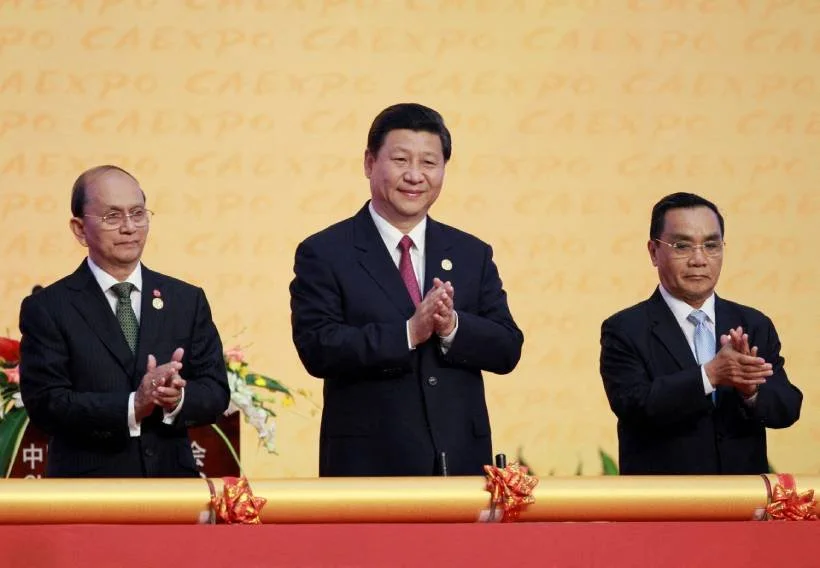
China's Vice President Xi Jinping (C), Myanmar's President Thein Sein (L) and Laos' Prime Minister Thongsing Thammavong (R) attend the opening ceremony of China-ASEAN Expo in Nanning, Guangxi autonomous region, China, September 21, 2012 | China Daily/via REUTERS
In this article for Modern Diplomacy, Rameen Siddiqui asserts that Southeast Asia’s increased preference for diplomatic relations with China compared to the United States is more so indicative of Southeast Asia’s decreased trust in the United States under Trump’s leadership.
Wang Yi just completed his third multi-country tour of Southeast Asia in twelve months. Xi Jinping has visited the region twice since April 2025. When Trump arrived in Beijing this week, the last time a senior American official had been in Southeast Asia was Hegseth, in 2025, doing a single tour that covered four countries and has not been repeated since.
That gap tells you most of what you need to know.
Southeast Asian governments notice who shows up and who does not. Presence in this region is not a diplomatic nicety. It is the substance of the relationship. When Washington stops sending senior officials regularly, governments do not wait around hoping things will change. They start building other options. They have been doing exactly that, and the results are showing up in ways that should concern anyone paying attention to where this region is heading.
The ISEAS-Yusof Ishak Institute published its 2026 State of Southeast Asia Survey in April. When asked to choose between China and the United States, 52% of respondents leaned toward China. A year ago, the top regional concern was Chinese aggression in the South China Sea. In 2026, it is anxiety about US leadership under Trump. The region has not fallen in love with Beijing. It has lost confidence in Washington, and that is a different problem with different implications.