A Reckoning for Thailand’s Liberals
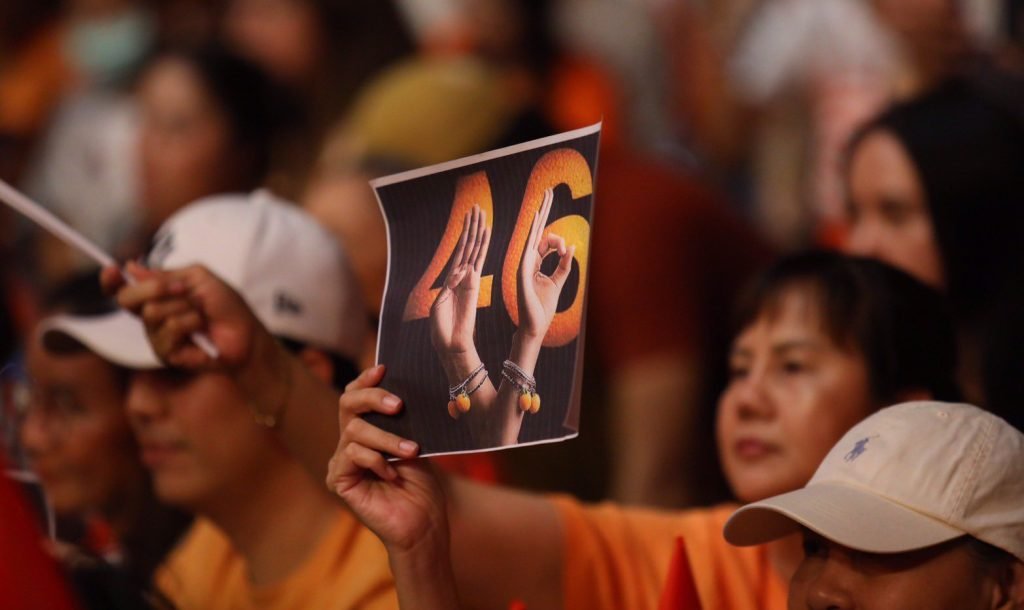
The People's Power Party Election Eve Rally, Bangkok | Photo: พรรคประชาชน – People's Party on Facebook
In an article for New Mandala, Jirapreeya Saeboo asserts that the People’s Party bears much of the blame of Thailand’s election results, due to facilitating Bhumjaithai’s capture of the state leading to the polls and weakening a flawed but indispensable ally in challenging conservative hegemony.
On 8 February Thailand’s democratic forces suffered their first genuine electoral defeat in 25 years. The Electoral Commission’s final certification of results from 499 out of 500 parliamentary seats has officially confirmed that Bhumjaithai surged to 191 seats, Pheu Thai plummeted from 141 to 74, and the People’s Party declined from Move Forward’s 151 to 120. For the first time, the pro-democracy parties have lost their parliamentary majority and both have lost a significant share of the popular vote.
The People’s Party trajectory—from its 2023 electoral success as Move Forward, through the Thailand–Cambodia border conflict, the Paetongtarn Shinawatra–Hun Sen phone call scandal, and finally the elevation of Anutin Charnvirakul to the prime ministership—constitutes a case study in how liberals’ strategic missteps gave conservatives a final bolt of energy to revive their political hegemony. I argue that the reconsolidation of conservative power resulted fundamentally from the People’s Party’s idealistic politics and its treating its rivalry with Pheu Thai—a secondary dynamic within the democratic bloc—as the primary conflict while downplaying the struggle against the royalist–military establishment. This led to efforts to weaken Pheu Thai, the only party with the organisational capacity, policy legacy, and mass base to concretely challenge conservative hegemony.