
Organizer: Foreign Correspondents Club of Thailand - FCCT
Description:
The resumption of peace talks between the Thai government and ethnic Malay insurgents in the south of the country has refocused attention on the long-standing, fiery conflict in the country’s deep south. The talks, which resumed earlier this year, had been on pause since 2020.
In the last 18 years, more than 7,300 people have died and 13,000 have been injured in the conflict which has roots in the post-WWII wave of national liberation struggles. Inspired by events abroad, insurgents took up arms against what they saw as Thai colonialism in their historical Pattani homeland. Violence in this conflict has largely been confined to Thailand’s three southernmost provinces, Pattani, Yala and Narithawat, and neighboring areas of Songkhla province.
The tensions, however, date back to the colonial era. The predominantly Malay-Muslim region was annexed to the Buddhist-dominated Thai state following the 1909 Anglo-Siamese Treaty between Great Britain and Siam. The situation has become more complex in the 21st century, marked by spiraling violence in the early 2000s.
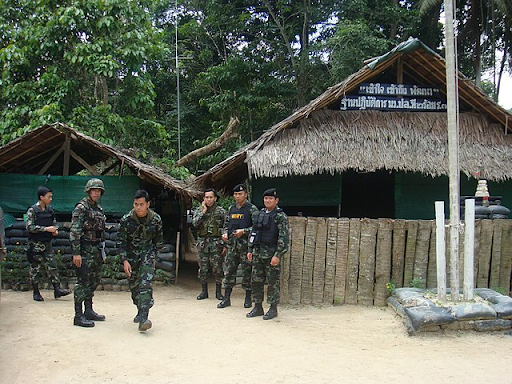
Amid concerns about human rights abuses on all sides, local leaders have consistently demanded a level of autonomy from Thailand. This led to peace talks with some separatist movements, but these have been fraught with disruptions since 2013.
In recent years, the talks have been led by Thai negotiators and the Barisan Revolusi Nasional (BRN), which spearheads the armed insurgency. The two sides reached verbal agreement in January to discuss political solutions acceptable to local people in the deep south, a reduction in violence, and a public consultation for all parties involved in the conflict.
The Thai government meanwhile said the resumption of talks has seen "meaningful and flexible discussion with tangible outcomes" towards establishment of a political solution and reduction of violence as well as public consultations in future.
However, the time frame for such measures remains open-ended. A new round of talks in early April comes against the backdrop of Malaysia’s decision to reopen its border with Thailand and moves by both countries to boost tourism, trade and new transport routes to the region.
Apparent progress in the talks and interest from international organizations such as the UN in stepping up assistance to the south has prompted concern in some quarters about “internationalization” of the conflict. Others welcome outside involvement in mediation and assistance to the region, one of the poorest areas of Thailand.
What is the future of Thailand’s deep south? Have the latest efforts made any headway in resolving one of the world’s longest-running yet most neglected conflicts?
Experts joining us on this evening include:
Panitan Wattanayagorn, Thai Government’s special envoy on southern border provinces and advisor to the National Security Council.
Rungrawee Chalermsripinyorat, lecturer, Institute for Peace Studies, Prince of Songkla University (Hat Yai Campus).
Matt Wheeler, senior analyst, Southeast Asia, International Crisis Group.
Representative of the Malay-Muslim movement (TBC).
Click here for more information.